The mirrorless camera revolution has taken the world by storm.
Mirrorless cameras are small, lightweight, and versatile enough to be used in various settings. Because of their smaller physical size and low weight, they’re easier to carry around on all adventures. Mirrorless cameras offer control over image quality that other types of cameras cannot match, making them ideal for shooting videos!

So now you’re looking to buy a mirrorless camera, but with so many options, it can be overwhelming.
Don’t worry; we’ve got your back. This guide will walk you through some of the most popular mirrorless cameras on the market today and then give recommendations for what features to look for when shopping for your next mirrorless camera.
10+ Best Mirrorless Cameras in 2025
- Canon EOS R6 — The best mirrorless camera in 2025 overall (Editor’s choice)
- Olympus OM-D E-M10 Mark IV — The best budget mirrorless camera
- Panasonic Lumix S5 — The best value mirrorless camera
- Sony Alpha 1 — The best mirrorless camera for professionals
- Canon EOS R5 — The best mirrorless camera for videos
- Sony Alpha 7 IV — The best mid-range mirrorless camera
- Sony Alpha a6400 — The best mirrorless camera for travelers
- Sony A7R Mark IV — The best high-resolution mirrorless camera
- Nikon Z5 — The best mirrorless camera for beginners
- Panasonic Lumix G100 — The best mirrorless camera for bloggers
What is the Best Mirrorless Camera in 2025?
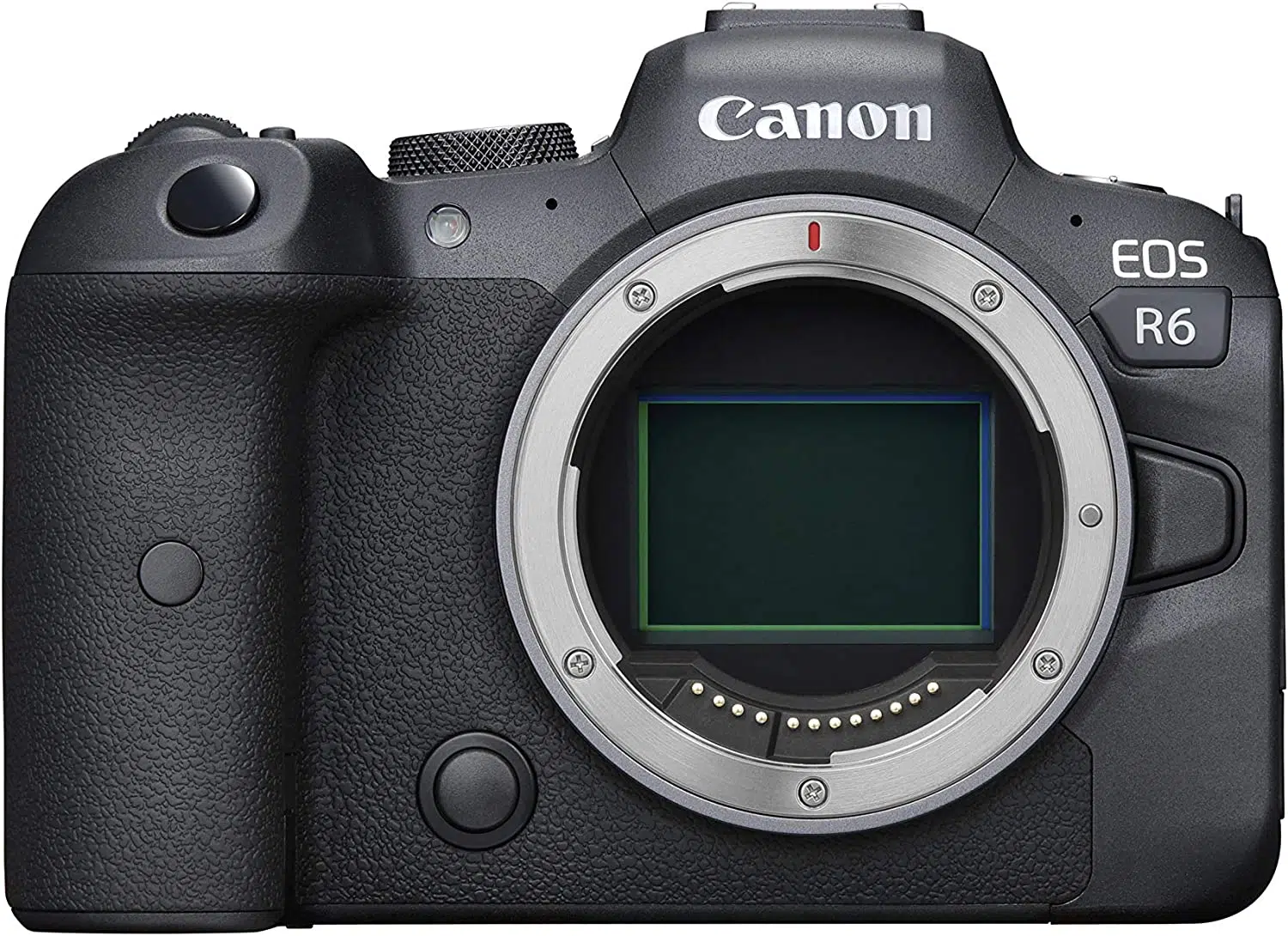
Mirrorless cameras are incredible pieces of technology and having the right one can make all the difference when it comes to capturing beautiful photos. In our minds, the best mirrorless camera is the Canon EOS R6,
Interested in some of our other top picks? Check out our comparison table below.


How To Choose the Best Mirrorless Cameras
When choosing a camera, there are several factors to consider. Here is an overview of some of the most important things you should look out for when shopping for a new one:
Sensor Type and Size
The biggest factor in choosing a mirrorless camera is the sensor size. Full-frame cameras have larger sensors than the sensor sizes used in APS-C, micro four-thirds, and 1-inch models. The larger sensors allow for greater image quality as they let in more light, but they also have a higher price tag due to their complexity and manufacturing costs.
- Full-frame
Full-frame sensors have larger pixels that help produce sharper photos across the board, which means you can get even greater detail, especially when it comes to low light conditions or when using high ISO. Therefore, they perform better in terms of dynamic range as well.
- APS-C
APS-C sensors have long been the standard for entry-level and mid-range DSLRs, but now they are used in many mirrorless cameras. Thanks to their crop factor, these cameras are more productive for nature and sports photographers.
- Micro four-thirds
Micro four-thirds cameras are great for people new to photography, as they are easy to use and intuitive. They are about a quarter of the size of full-frame sensors.
Megapixels
The next most important thing to consider when shopping for a new camera is its megapixel count. It is the amount of detail that a camera can record in an image. You can find cameras ranging from 12 to 61 megapixels, but 20MP and above should suffice for most users.
Connectivity
The connectivity options determine how easy and efficient it is to use your device. Cameras with Wi-Fi and Bluetooth capabilities can connect to other devices such as laptops or phones so that you can transfer images between them immediately. Some cameras even have built-in apps that allow you to view, edit, and share all photos on your phone!
Image Stabilization
This is one of the most important features of any camera, especially if you’re shooting in low light or have shaky hands (or both). While some cameras have built-in image stabilization, others require a lens that does so.
Video Resolution
If you’re looking for the best video quality, pick a camera that can shoot at least Full HD videos. The best mirrorless cameras can shoot 4K or higher resolution video, but not all cameras have those options.
Shooting Rate (FPS)
The highest number here refers to how many images per second can be recorded by the sensor. This number is typically between 8 FPS and 30 FPS when capturing images. Lower numbers will result in slower frame rates overall—so keep this one in mind while deciding whether or not shooting fast-paced subjects is essential to you.
10 Best Mirrorless Cameras in 2025
1. Canon EOS R6 (Editor’s Choice)

The best mirrorless camera in 2025 overall
Sensor: Full frame CMOS | Megapixels: 20MP | Display: 3.0-inch tilt-angle touchscreen, 1,620K dots | Maximum shooting speed: 12 FPS (mechanical), 20 FPS (electronic) | Viewfinder: 0.5-inch OLED colour EVF, 3.69 million dots | Maximum video resolution: 4K | Lens mount: Canon RF
The Canon EOS R6 is the perfect blend of speed, image quality, and features. It includes a newly developed 20MP CMOS sensor paired with the latest DIGIC X image processor to deliver stunning, high-quality photos right out of the box.
With a native ISO range of 100-102400, expandable as high as 204800, you can capture a wide range of photos in any situation. It even has a high-speed continuous shooting of up to 12 FPS with a mechanical shutter and up to 20 FPS with an electronic shutter, ideal for quick action as it masterfully captures the fleeting moments in life.
However, our favorite feature of the EOS R6 is the Dual Pixel CMOS AF for the industry’s highest autofocus performance in live view mode and improved tracking performance for moving subjects. In addition, the 5-axis image stabilizer ensures that your subjects always look clear and steady, whether it is stills or recording 4K footage.
The dual LCD screen offers great flexibility when composing your shots and viewing captured images on the bigger screen, offering the perfect combination of form and function. Plus, the R6 has Wi-Fi and Bluetooth connectivity built right into its body—you can connect your phone wirelessly if you want to transfer photos directly from the camera to your phone or computer.
Ultimately, no mirrorless camera is perfect, but Canon’s flagship EOS R6 is as close as it gets.
| Pros | Cons |
| ➕Impressively detailed stills and movies | ➖A low 20MP resolution compared to rivals |
| ➕Best-in-class autofocus with Dual Pixel CMOS AF | ➖Limitations for recording 4K video |
| ➕Great low-light performance | |
| ➕Fast burst speeds | |
| ➕Ergonomic design | |
| ➕Decent connectivity options | |
| ➕Support for HEIF files | |
| ➕Dual card slots |
Latest Price on Amazon:
- High Image Quality featuring a New 20 Megapixel Full-frame CMOS Sensor.
- DIGIC X Image Processor with an ISO range of 100-102400; Expandable to 204800.
- High-speed continuous shooting of up to 12 fps with Mechanical Shutter and up to 20 fps electronic (silent) shutter.
- Dual pixel CMOS AF covering approx. 100% area with 1,053 AF areas.
- Subject tracking of people and animals using deep learning technology.
2. Olympus OM-D E-M10 Mark IV

The best budget mirrorless camera
Sensor: Micro Four Thirds | Megapixels: 20.3MP | Display: 3-inch 180-degree tilting touchscreen, 1,037K dots | Maximum shooting speed: 8.7 FPS | Viewfinder: EVF, approx. 2,360,000 dots | Maximum video resolution: 4K | Lens mount: MFT
The E-M10 Mark IV is a no-compromise budget option that is both a pleasure to own and use. It boasts a 20.3MP micro four-thirds sensor and TruePic VIII processor pair capable of recording 4K videos and fast 8.7 FPS continuous shooting rates with a wide ISO range, providing the flexibility you need to work with a wide range of subjects in both indoor and outdoor scenarios.
The new sensor is equipped with a reliable 121-point contrast-detection AF system, which uses subject detection algorithms from the E-M1 series for faster, more accurate, and intelligent focusing performance in various lighting conditions. In addition, it has built-in image stabilization, similar to the E-M1 Mark II and other flagship Olympus models.
It also has a flip-down LCD monitor, which can be used in landscape or portrait orientations. While its smaller micro four-thirds sensor does not perform as well as its full-frame and APS-C counterparts in low light, you can get smaller, more affordable lenses with greater focal reach to extend the camera’s capabilities.
From selfies and video chats to vlogging and social media posts, this camera fits every use case. Moreover, the E-M10 Mark IV comes bundled with many handy accessories, such as a 14-42mm EZ lens, 64GB SD card, camera bag, and a lot more, so you don’t have to spend an extra penny on upgrading your camera anytime soon.
| Pros | Cons |
| ➕Affordable | ➖Slow burst speeds with autofocus |
| ➕5-axis in-body stabilization | ➖No mic port |
| ➕4K video | ➖No USB-C port |
| ➕Good selection of lenses | |
| ➕In-camera USB charging | |
| ➕Lightweight | |
| ➕Bundled with useful accessories | |
| ➕Flip-down touchscreen |
Latest Price on Amazon:
No products found.
3. Panasonic Lumix S5

The best value mirrorless camera
Sensor: Full-frame | Megapixels: 24.2MP | Display: 3-inch vari-angle touchscreen, 1.84m dots | Maximum shooting speed: 7 FPS (mechanical shutter), 6K Photo Mode (18MP/30 FPS) | Viewfinder: EVF, approx. 2,360,000 dots | Maximum video resolution: 4K | Lens mount: L-mount
This is a value camera with a lot of power, but it’s also highly mobile and packed with genuine creative capabilities. The Lumix S5 offers the same imaging power as the flagship Lumix S1 in a much smaller body and impressive video specs.
It can capture stunning stills with its 24.2MP full-frame sensor and features a high-resolution mode that lets you capture 96-megapixel pictures with unmatched levels of detail. The quality of the stills and 4K/60p 10-Bit 4:2:0 video is further complemented by the high-speed, high-precision AF system, 6.5-stop dual image stabilization, and 14+ stops dynamic range for vibrant results.
The camera has several recording formats and a V-log picture profile to help you achieve the look and feel of broadcast-quality video. It also comes with excellent battery life and doesn’t impose a limit on recording time, so you can continue shooting without any worries. There is also a 10-bit internal recording capability, allowing you to capture deeper color levels and immerse your audience in vivid, original content.
The Lumix S5 is a hybrid camera that blends the best of both worlds. And its rugged dust and splash-resistant body mean you can take it on all your outdoor adventures. If you want to take your images to the next level but at a bargain price compared to other cameras in the same price range, the Panasonic Lumix S5 will be hard to beat.
| Pros | Cons |
| ➕Powerful 24MP full-frame sensor | ➖Bulky |
| ➕No video recording limit | ➖Contrast AF only |
| ➕Excellent color reproduction | |
| ➕96MP high-resolution mode | |
| ➕Beautiful 10-bit 4K/60 FPS video | |
| ➕Dust and splash-resistant chassis | |
| ➕Great controls | |
| ➕Dual SD card slots | |
| ➕Bang for the buck |
Latest Price on Amazon:
- A LIGHTWEIGHT, POWERFUL HYBRID CAMERA FOR VIBRANT STILL PHOTOGRAPHY AND CINEMATIC VIDEO: Realize your creative vision with extraordinary 4K 60p, 10-bit video, FHD 180fps Slow Motion option as well as...
- DETAILED PHOTO AND VIDEO THAT WILL DELIGHT ENTHUSIASTS AND EXPERTS ALIKE: Capture content in impressive high quality with 96MP High Resolution mode, Dual Native ISO to minimize noise in high...
- IMPROVED, HIGH-PRECISION AUTOFOCUS AND POWERFUL IMAGE STABILIZATION: Improved autofocus includes detection of the head as well as eyes, face and body, to capture subjects with ease and precision....
- EXPANDED FEATURES OFFER NEW LEVELS OF CREATIVITY: Use Live View Composite mode to instantly create a stunning image out of several live shots to capture fireworks or a starry sky
4. Sony Alpha 1

The best mirrorless camera for professionals
Sensor: Full frame | Megapixels: 50.1MP | Display: 3-in tilting, 1.44m dots | Maximum shooting speed: 30 FPS | Viewfinder: 240 FPS refresh rate, 9.44M dot 0.64-inch QXGA OLED EVF | Maximum video resolution: 8K | Lens mount: Sony FE
Sony is known for its ability to stuff a camera full of engineering wizardry inside a small and stylish body, and the Alpha 1 is no exception. It’s ideal for photographers looking for a camera that can do it all—it even surpasses dedicated sports and video cameras at their own game. Breathtaking images come effortlessly from this incredibly slim and elegant camera.
This little powerhouse packs a punch with a 50.1MP full-frame Exmor R CMOS sensor that works in tandem with the next generation BIONZ X image processing engine so you can get professional results easily in every situation. The Alpha 1 features the world’s fastest flash synchronization in a full-frame sensor with a speed of 1/400 sec and the world’s first anti-flicker mechanical and electronic shutter.
Alpha 1 incorporates Sony’s advanced hybrid autofocus system, combining Fast Hybrid AF for quick, accurate, and reliable performance with 425-point contrast-detection AF. The new BIONZ XR processing engine improves this even further, with 30% improved performance from the AI-based autofocus system regarding detecting and tracking subjects.
As if the Alpha 1 did not boast enough unique features already, it can deliver 8K movies with extraordinary realism, four times the resolution of 4K, with full-time tracking and real-time eye AF functionality. Not only that, it’s equipped with the world’s first OLED EVF with a 240 FPS refresh rate for super-smooth display quality.
The camera body is also very small and lightweight compared to other DSLRs like Canon or Nikon’s offerings, which means carrying your gear won’t be too heavy on your back anymore! Sony’s Alpha 1 camera takes professional photography to a new level but isn’t just for professionals—anyone fascinated by the world of photography can use it, too!
| Pros | Cons |
| ➕50MP resolution stills with high dynamic range | ➖Expensive |
| ➕Cinematic-quality 8K video without overheating | ➖Complex menus |
| ➕30 FPS continuous shooting speeds | ➖8K video drains the battery |
| ➕Sharp EVF | |
| ➕Reliable autofocus system | |
| ➕Compact and lightweight |
Latest Price on Amazon:
- 50.1MP full-frame stacked Exmor RS CMOS sensor w/ integral memory
- 8x more powerful, next generation BIONZ XR image processing engine
- Blackout-free shooting up to 30fps from fast sensor readout speed
- World’s first 240 fps refresh rate, 9.44M dot 0.64” QXGA OLED EVF
- World’s first anti-flicker mechanical and electronic shutter
5. Canon EOS R5

The best mirrorless camera for videos
Sensor: Full frame | Megapixels: 45MP | Display: 3.15-inch vari-angle touchscreen, 2,100k dots | Maximum shooting speed: 12 FPS with a mechanical shutter, 20 FPS with electronic shutter | Viewfinder: OLED EVF, approx. 5,690k dots, 100% coverage, 0.76x magnification | Maximum video resolution: 8K | Lens mount: Canon RF
Canon’s top-of-the-line video DSLR, the EOS R5, is a gorgeous machine with a full complement of professional features. A 45MP Full-Frame CMOS sensor works in tandem with the 5-axis image stabilizer to offer professional quality stills and videos.
This is combined with a large selection of AF targets with 99% coverage and intelligent tracking capability of people and animals using deep learning technology.
This full-frame device can shoot stunning 8K DCI movies and 4K videos in 10-bit 4:2:2 (H.265) with Canon Log or HDR PQ. The videos and images come out crisp and clear thanks to the DIGIC X image processor, which can shoot at 20 FPS with its electronic shutter, so your subjects are always focused, even during fast-paced action.
If you’re a person who needs to switch between stills photography and videography or enjoy juggling between different styles of photography, this is the best all-in-one solution you can find.
| Pros | Cons |
| ➕Mesmerizing 8K video | ➖Video recording limitations |
| ➕Versatile | ➖High price tag |
| ➕Best full-frame IBIS | |
| ➕Unparalled AF performance | |
| ➕Lightning fast burst speeds | |
| ➕Solid battery life |
Latest Price on Amazon:
- High Image Quality: Canon EOS R5 8K digital camera features a stacked, back-side illuminated 45-megapixel full-frame CMOS sensor for phenomenal low-light performance, image clarity and level of detail
- Powerful Image Processor: DIGIC X image processor with an ISO range of 100-51200; expandable to 102400x; powers 8K capture, enhances detail, reduces noise and more with high speed and efficiency
- High-Speed Shooting: High-speed continuous shooting of up to 12 fps with mechanical shutter and up to 20 fps using electronic (silent) shutter — a large step-up in our EOS R-series line of...
- Superb Autofocus: Dual pixel CMOS AF with 1,053 AF points; covers approximately 100% area; subject tracking of people, animals and vehicles using deep learning technology; features Eye Control AF...
- High-Resolution Video Capture: 8K RAW, 4K up to 120fps Internal Recording in all Formats, with Auto Focus — stellar 8K camera for video recording
6. Sony Alpha 7 IV

The best mid-range mirrorless camera
Sensor: Full frame | Megapixels: 33MP | Display: 3-inch TFT | Maximum shooting speed: 10 FPS | Viewfinder: 0.5-inch electronic viewfinder (Quad-VGA OLED) | Maximum video resolution: 4K | Lens mount: E-mount
For the best mid-range compact camera, we like Sony’s new A7 IV. It’s not the most expensive or most advanced camera out there. Still, it does everything well enough to compete with other cameras in its class, especially if you’re looking for something with good autofocus performance on par with full-frame models.
The Alpha 7 IV’s AF system is a marvel. With a vast collection of points, the camera can accurately focus on where you point it. It also packs a wide coverage of over 94% of the image area for both stills and movies. The real-time processing of this data by the BIONX XR processor lets you get that perfect shot that others just miss.
The 33MP full-frame CMOS sensor delivers outstanding low-light performance with minimal noise, rich colors, and images with gorgeous highlights. Video quality is just as impressive, and the camera can record footage up to 4K 60p 10-bit 4:2:2 w/ full pixel readout in all recording formats, including 7K oversampling.
Overall, the Sony Alpha 7 IV offers great value and is ideal for photographers of all levels.
| Pros | Cons |
| ➕Great value | ➖Only 6 FPS burst shooting at maximum settings |
| ➕4K60 video with 10-bit color sampling | |
| ➕Vari-angle touchscreen | |
| ➕Supports S-Cinetone for natural color production | |
| ➕Large library of lenses | |
| ➕Professional-quality stills |
Latest Price on Amazon:

- 33MP full-frame Exmor R back-illuminated CMOS sensor.Operating temperature : 0 to 40 °C (32 to 104 °F), Rated input : 100 - 240 V , 50/60 Hz, 0.2 A.
- 8x more powerful, next generation BIONZ XR image processing engine
- Up to 4K 60p 10-bit 4:2:2 w/ full pixel readout in all recording formats
- 7K oversampling full-frame 4K 30p 10-bit 4:2:2 w/ no pixel binning
- Beautiful color expression made simple with S-Cinetone color profile
7. Sony Alpha a6400

The best mirrorless camera for travelers
Sensor: APS-C CMOS | Megapixels: 24.2MP | Display: 3-inch wide type TFT | Maximum shooting speed: 11 FPS | Viewfinder: 0.39-inch electronic viewfinder | Maximum video resolution: 4K | Lens mount: Sony E-mount
If you’re looking for a travel-friendly mirrorless camera that can handle just about anything, this is it. The Sony Alpha a6400 is the best mirrorless camera for travelers because its weather-sealed body, customizable buttons, and touch screen make it comfortable to use. And it’s small and light enough to fit in your bag but has all of the features you’ll need when shooting on the go.
When it comes to performance, the Sony α6400 is a versatile, powerful, and fast mirrorless camera that can capture excellent photos in almost any situation. It features a 24.2MP APS-C sensor with speeds of up to 11 FPS and the world’s fastest 0.02 sec AF with real-time AF and object tracking. The result is crisp and clear images with a lot of dynamic range and natural colors, even in low light.
The Sony Alpha a6400 does not disappoint when it comes to shooting videos either and is capable of recording 4K movies at 30 frames per second, with time-lapse settings, slow motion, and other creative settings. It also takes self-portraits and vlogging to new heights by offering the flexibility to tilt its LCD screen, making it easy for selfie shooters to compose their shots.
All in all, the Sony Alpha a6400 is a solid option for travelers thanks to its lightweight, compact design, excellent battery life, and impressive performance.
| Pros | Cons |
| ➕Sturdy and compact build | ➖No IBIS |
| ➕Quick autofocus | ➖Limited controls |
| ➕180-degree fully tiltable LCD touch screen | ➖Average battery life |
| ➕Large EVF | |
| ➕Fantastic image quality | |
| ➕Lots of creative controls |
Latest Price on Amazon:
- Next Gen speed: experience the world’s fastest 0. 02 sec AF with real-time AF and object tracking
- Enhanced subject capture: wide 425 Phase/ 425 contrast detection points over 84% of the sensor
- Fast and accurate: up to 11Fps continuous shooting at 24. 2MP raw with crisp, clear natural colors
- Multiple movie functions: make time lapse movies or slow/quick motion videos without post processing
- Tiltable LCD screen: customizable for vlogging, still photography or recording a professional film
8. Sony A7R Mark IV

The best high-resolution mirrorless camera
Sensor: Full frame CMOS | Megapixels: 61MP | Display: 3-inch tilting touchscreen, 1,440,000 dots | Maximum shooting speed: 10 FPS | Viewfinder: Electronic, 5.76m dots | Maximum video resolution: 4K | Lens mount: Sony E-mount
Sony’s A7R Mark IV is a camera with the world’s first 61MP full-frame 35mm back-illuminated Exmor R CMOS Image Sensor. This sensor’s image quality and performance, combined with the BIONZ X imaging engine, easily surpasses other cameras in its class, creating stunning images with unmatched levels of detail and deep colors.
The increased resolution allows for more detail in areas of the picture where it matters most. This camera is designed to take full advantage of the tremendous image quality and dynamic range of the 61MP sensor, offering accurate color reproduction with a 15-stop dynamic range at low sensitivities for greater color accuracy and fast hybrid autofocus for smooth and precise shooting.
Sony has mastered the art of capturing beautiful detail using its exquisite sensors. The Sony A7R Mark IV is no exception and is an optical camera unlike any other on the market today. With an astonishingly detailed performance and stunning resolution, it’s fitting that this camera will help you bring out your capabilities at their best.
| Pros | Cons |
| ➕World record 61MP resolution full-frame sensor | ➖Outdated design |
| ➕10 FPS RAW capture | ➖Touchscreen could’ve been better |
| ➕Highly-detailed images | |
| ➕Tilting LCD touchscreen | |
| ➕Multiple video recording options | |
| ➕Bright, high-contrast EVF | |
| ➕Intelligent AF system |
Latest Price on Amazon:

- Stunning resolution: world’s first 61MP full-frame 35mm back-illuminated Exmore R CMOS Image Sensor. The product is compatible with Final Cut Pro X and iMovie
- High speed: up to 10Fps continuous shooting at 61MP with AE/AF tracking; 26. 2MP in APS-C crop mode
- Fast Hybrid Autofocus: 567 Phase detection AF points and 425 contrast AF points to cover more area
- Advanced subject recognition: real-time tracking and real-time eye AF for humans, animals and movies
- Accurate color reproduction: 15-stop dynamic Range at low sensitivities for greater Color accuracy
9. Nikon Z5

The best mirrorless camera for beginners
Sensor: Full-frame | Megapixels: 24.3MP | Display: 3.2-inch tilting touchscreen, 1,040k dots | Maximum shooting speed: 4.5 FPS | Viewfinder: EVF, 3,690k dots, 100% coverage, 0.8x magnification | Maximum video resolution: 4K | Lens mount: Nikon Z
If you’re still new to digital photography and are looking for a camera that won’t overwhelm you with too much tech, your best bet is the Nikon Z5. With an attractive price tag, two card slots, and 4K UHD video recording, this camera offers full-frame features at a much more affordable price.
It comes with a capable sensor and weather-sealing and offers five-stop image stabilization, an incredible electronic viewfinder, VR image stabilization, a superb autofocus system, many connectivity options, and creative features built-in–all in a compact and lightweight frame.
Some cameras are just made to be easy to use, and this is a camera that fits that description perfectly. The Nikon Z5 has everything you need in a camera, which makes it an easy recommendation if you are just starting or looking to upgrade your existing gear.
| Pros | Cons |
| ➕Very easy to use | ➖Disappointing 4.5 FPS burst speed |
| ➕Comfortable grip | ➖Cropped 4K video |
| ➕High-resolution EVF | |
| ➕4K video recording | |
| ➕VR image stabilization |
Latest Price on Amazon:

- 24.3MP Full-Frame Mirrorless Camera | Nikon’s most compact, lightweight full-frame interchangeable lens Z series camera
- Outstanding Image Quality | Sharp, lifelike details, vibrant colors and great low-light performance
- 4K/30p and 1080/60p Video Recording | Crisp, smooth videos with shallow depth of field; USB power delivery; HDMI output
- Eye-Detection Autofocus | Automatically locks onto the eyes of people, dogs and cats and tracks them as they move around the frame
- 5-Axis In-Body Image Stabilization | Capture steady handheld videos and sharp photos; shoot at slower shutter speeds in low light without causing camera blur
10. Panasonic Lumix G100

The best entry-level full-frame mirrorless camera
Sensor: Micro Four Thirds | Megapixels: 20.3MP | Display: 3-inch vari-angle touchscreen, 1,840k dots | Maximum shooting speed: 10 FPS | Viewfinder: EVF, 3.69m dots | Maximum video resolution: 4K | Lens Mount: MFT
The Lumix G100 might be one of the most affordable cameras on the market, but it doesn’t sacrifice quality. It has all the features you’d expect from a specialist compact camera but in an exciting way. There is a high-quality 20.3MP micro four-thirds sensor, 4K/30 FPS video recording mode, free angle monitor, and a 12-32mm lens, which means you can shoot amazing vlogs effortlessly.
It also boasts 5-axis hybrid image stabilization to keep footage clear and a high-performance microphone for 360 audio, so movies sound as good as they look. The Lumix G100 is ideal for beginners, too, with an intelligent auto mode that gives you the perfect shot every time. If you want to make quick and easy vlogs but don’t want to spend a fortune on a high-end camera, the Lumix G100 is a perfect choice.
| Pros | Cons |
| ➕Cheap | ➖No in-body stabilization |
| ➕Immersive 360-degree sound | ➖Average battery life |
| ➕Includes a 12-32mm lens | |
| ➕Pocket-sized | |
| ➕Fantastic video quality especially in bright environments | |
| ➕Dual SD card slots |
Latest Price on Amazon:
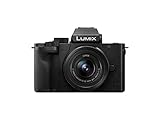
- Feature-Packed Camera: Why trust your memories to a phone. With exceptional performance and versatility, the LUMIX G100 captures life in crystal-clear 4K photo, 4K 24p 30p video, and advanced audio
- Grows as Your Skills Grow: iA (intelligent auto) mode gives the perfect shot every time, or use manual modes as your skills sharpen; Micro Four Thirds system is compatible with all LUMIX lenses for...
- Use as a Webcam: Easily connect the G100 to your computer so that your web calls, livestreams, interviews, and media all look crisp, bright, and professional
- Shoot, Transfer, Edit, Share: Features guide you at every step—frame marker for social media aspect ratios; facial recognition; blur-free dual image stabilization and V-Log L recording. Upload to...
- Advanced 360-Degree Sound: High-performance microphone with tracking audio auto-adjusts to record clearly inside or outside, in crowds, one-on-ones, nature, and more; lightweight camera for one-handed...
Related Posts
Best Camera & Photography Gear
- Best cameras for designers
- Best video cameras
- Best 4K video cameras
- Best camera tripods
- Best cameras for Beginners
- Best memory cards
- Best compact cameras
Best Mirrorless Cameras in 2025
The mirrorless camera market is quickly becoming a force to be reckoned with. It has already surpassed the DSLR in terms of popularity and sales. This article should help you understand what’s happening in the world of mirrorless cameras by highlighting some best-in-class options in the market today.
It is worth noting that every camera has advantages and disadvantages, so do research before making a purchase!
Which camera would you like to work with the most? Let us know in the comments below!