If you are serious about brand building at scale, this is the episode for you.
Richard Cotter is a brand consultant at the top of his game. He left school at 17 and developed his career to the point where now he is parachuted to work with large organizations that have brands that are underperforming and help scale them.
He is best known for turning around outdoor performance and lifestyle brand Berghaus.
He is the author of the book ‘The Zebra Reality: How to Create Unstoppable Organizational Momentum’ and achieve all your business goals.
In this episode, Matt Davies and Jacob Cass sit down with Richard and tuck into how he has got to where he is and his top tips on scaling underperforming brands.
We talk about differentiation, attributes of global brands, the power of alignment, and the five steps for creating organizational momentum.
A super episode packed with value with someone who has been there, done it, and got the Berghaus T-shirt.
Listen Here
- Listen on Apple Podcasts
- Listen on Spotify
- Watch on YouTube
- Listen below
Love the show? Please review us on Apple or Stitcher.
Play Now
Watch on Youtube
Show Notes
Learn Brand Strategy
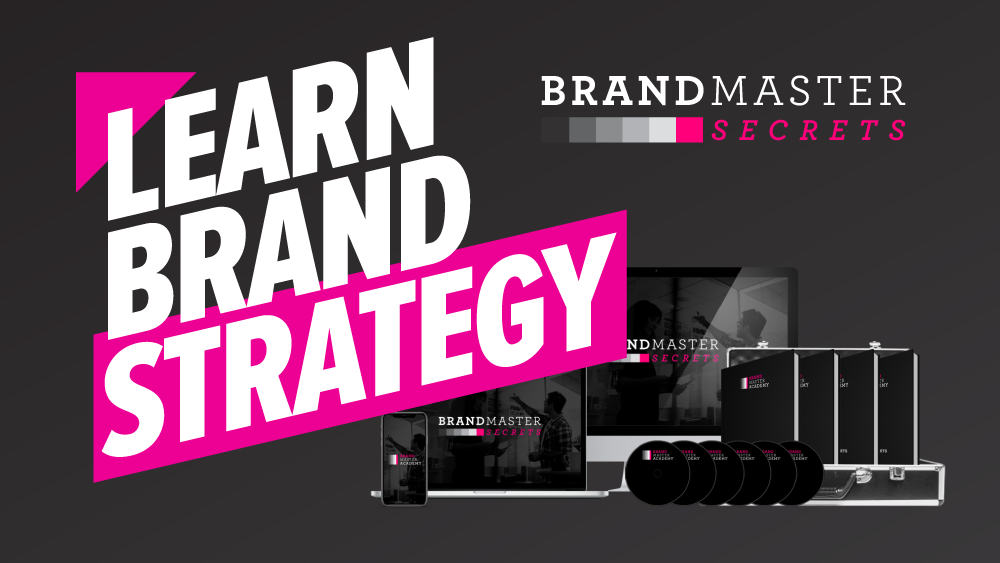
Brand Master Secrets helps you become a brand strategist and earn specialist fees. And in my opinion, this is the most comprehensive brand strategy course on the market.
The course gave me all the techniques and processes and more importantly… all the systems and tools I needed to build brand strategies for my clients.
This is the consolidated “fast-track” version to becoming a brand strategist.
I wholeheartedly endorse this course for any designer who wants to become a brand strategist and earn specialist fees.
Check out the 15-minute video about the course, which lays out exactly what you get in the Brand Master Secrets.
Transcript (Auto Generated)
Hello, and welcome to JUST Branding, the only podcast dedicated to helping designers and entrepreneurs grow brands. Here are your hosts, Jacob Cass and Matt Davies.
Hello, everybody, and welcome to the latest episode of JUST Branding. Today, we have got a treat for you because we have Richard Cotter with us. If you haven’t heard of Richard, then you will hear about him during this episode.
I met Richard at a business event. We’d both been working.
The bar, you mean?
Well, that’s what you said before.
A business event.
Well, it was kind of like a whole thing, wasn’t it, Richard? There was an event which Richard spoke at, which I was so thrilled with his talk. And then because we had a mutual client and we both knew some of the leadership, we were kindly invited to dinner afterwards.
And I happened to be sat next to Richard. I mean, dinner, there was a bar and there was alcohol involved, but it was a little bit more sophisticated than that. Would you agree, Richard?
I would agree. It was extremely sophisticated, Matt.
Extremely sophisticated.
It was in Manchester. So everything in Manchester is sophisticated.
Yeah.
Yeah. I’m glad you said that because my nan sometimes listens in. So, you know, it’s very important.
But yeah, no, no. So we met there and I was thoroughly impressed with Richard on a number of levels. And during the event that he spoke at and then subsequently in the conversation, which was for a few hours afterwards, I just thought this chap has so much amazing stuff going on that our audience here at JUST Branding must hear about it.
In effect, and Richard, I will let you explain exactly what you do, but in effect, Richard is often parachuted in to brands, the large brands that are sort of struggling a little bit. And they look to him to help bring them back to glory. And so he’s done this a number of times in his career, most notably for Berghaus, which is a very big outdoor lifestyle performance brand, I would say here in the UK and across Europe.
So we’ve got a wealth of knowledge there is a load of other ones as well. But I won’t bore everybody with that. Basically, Richard is a high class expert, looked to by large organizations to improve their brand.
So it’s a thrill to have you on the show. Thank you, Richard, for joining us.
Pleasure to be here.
I should also add one extra thing. And that is that Richard has an amazing book called The Zebra Reality. So we’ll ping a link on the show notes after to that.
But it’s also a wonderful thing. We’re going to be tucking into some of the details in that book. So anyway, without me waffling on for ages, I just want to turn it over to you, Richard, just to give us a high level snapshot of your story.
How did you become this consultant that is looked to? How did you build up your profile to that point? What’s the journey been for you in your career?
Just high level, just so we get an idea.
High level, okay. Let me start, right? I’m going to say I left school at 17.
I think actually the school requested me to leave when I was 17. Get out. Lots of people throughout my working life have tried to get me to tell them the whole story about why I was asked to leave and I’ve always refused flatly to ever tell anybody that story.
But maybe for a future podcast, it would be quite entertaining for your listeners to understand why I left school at 17. So look, I left school at 17. I had a bunch of different options.
For about eight, nine years, I played professional sport at a reasonably high level. I was a reasonably talented sportsman. I went into sport.
Like a lot of kids, you kind of go, I want to pursue my dream. I pursued my dream. Eventually, you hit that point where you go, wow, I think I need to recognize that I’m probably not quite as good as I thought I was at this.
And I better find something else to do. And so that was it. You know, I hit mid 20s, no qualifications, and I went into business.
I went into a retail organization. I started working on the shop floor. I kind of saw stuff that I didn’t think was really optimized as well as it could be.
Yeah, part of my profession as well, I was a professional golfer. So I spent a lot of time teaching some pretty kind of high profile celebrities. So I wasn’t sort of daunted by conversational communication with kind of senior people.
And I just sort of said to these guys, you know, if you really want to achieve what you’re trying to achieve, you’re going about it the wrong way. You need to do it differently. And they sort of listened to me and it worked and I got promoted and accelerated up.
And yeah, well, how long would it have been? Two, three years later, I’m 30 years old. And I’m managing director of a reasonable sized wholesale distribution business.
And from there, it was just a case of, you learn stuff and you develop stuff and you become more sophisticated at the ways you develop organizations and you move on to something bigger and something bigger and something bigger. And everyone seemed to work reasonably well. And then, yeah, you find yourself managing some pretty big brands on a global scale, which for me is quite nice considering at 17, I got thrown out of school and have no qualifications.
Let me ask you about that just quickly, Richard. Do you think that that gives you an edge, having that almost like non-typical background to education, for example? I also left school very early and I kind of personally feel that in my work as a consultant, I do look at things differently.
I have more of a kind of a rebellious kind of edge, like just because you’ve taught to do it that way, why, you know, doesn’t mean you have to. I don’t know if you’ve got that sort of similar spirit, if that’s the way of putting it.
Yeah, look, I think there’s an element of that. I think by definition of having a similar having a slightly different upbringing, you become more diverse in your structured thinking, right, because you’re not stereotyped into an education system, which leads you to think in a kind of slightly programmed way or approach issues or tasks or objectives in a programmed way, right? So, do I think that’s the reason why I’ve been successful?
No, absolutely not. I think what you do in the early stages of your work in life is, you know, the broader you are, the more experience you get, the more inquisitive you are, the more you learn, the more you learn, the more you practice and try. And I think those are the attributes.
So I don’t think it really matters whether you have, you know, a first in law from Cambridge or you got expelled from Bradley Moore at 17. I don’t think that really matters. I think it’s more about, you know, how your mind operates when you approach the tasks that are in front of you when you’re running a brand or an organization.
I completely agree. What do you think, Jacob?
I was going to note that, you know, that breadth of skill is so crucial for a strategist to know, you know, how things work, design, marketing, business, operations, you know, it’s all part of brand. And in my opinion, they make the best strategists because they know the mechanics, they know culture, they know how everything integrates and works together as a system. So I completely agree with you as well, Richard.
Yeah, I think, I think, Jacob, one of the things that I’ve kind of learned through the career is, and again, I’m always at pains in the organizations that I work in to kind of articulate this. I’m not a functional specialist in anything, right? So I always kind of use this line that I’m not actually really good at anything.
I’m sort of okay at a lot of things. And that gives me a breadth of vision that sort of functional specialists don’t always have. And I think that from a strategy perspective is really good.
Because if you’ve got that breadth of vision on your inquisitive, you kind of go to places that lots of people won’t necessarily go. What you have to be smart enough to understand is when it comes to functional excellence, you don’t have the answer, right? So what you’ve got to do then is you’ve got to be smart enough to surround yourself with some really, really talented people who are functional specialists.
And then you’ve got to be humble enough to get out of their way and let them crack on and do what they’re trying to achieve, right? And I see a lot of organizations and, Matt, to an extent, this is kind of one of my biggest learnings of turnaround. I do a lot of turnaround stuff, right?
As Matt said in the introduction, I get parachuted into organizations which are underperforming. Primarily, they will be shareholder-owned assets which are underperforming. And I’ll get parachuted in to go, how do we get this business into a better position?
And a lot of the time, I go in and I find that the CEOs and the business leaders are spending too much of their time trying to manage the organization, and not enough of their time trying to create an environment which allows talented people in the organization to flourish and express their capability. And in the book, there’s a whole piece about creating a leadership brand, and then there’s another section about creating the environment. And I’m not sure business leaders really kind of get that.
I think too many of them think they have to run the business on a day-to-day basis. And my 30 years experience is you don’t actually have to run the business on a day-to-day basis.
It’s not your job, is it? Yeah. And I find that a lot with my consultancy.
It’s funny because I often say to CEOs I work with, look, I don’t have the answers. You’re not recruiting me and hiring me to have every answer. I’ve got frameworks, I’ve got tools, I’ve got methods.
I can wheel things out. I’ve got energy. I’ve done this sort of thing before.
But ultimately, I need to rely on your team to help move the dial. And if there are things that we don’t know or that we need help with, we might need extra resource to go out and get those. And I think once you understand that, it takes a lot of pressure off a strategist.
Right.
It really does. I mean, it kind of helps you think, well, I’ve never worked in this, you know, some people say, well, look, I’ve never worked in this category before. You know, I could never, you know, kind of enter and consult in, I don’t know, a B2B SaaS company.
Right.
But if you’ve got the principles that you’ve worked on over your career, you know what good looks like, then you can advise you have value that you can offer on a broader spectrum, should you wish. And it’s just kind of knowing that you don’t have to know everything, I think, is once I figured that out, I was like, oh, great.
Life’s easy. Once you’ve worked that bit out, life’s easy, isn’t it?
Right.
It takes all the pressure. To an extent, that’s where, you know, that’s where the book came from. Right.
Because, you know, I work in some really diverse sectors now. I’m kind of sector agnostic. I grew up, I always work sort of retail, consumer and brand.
That’s really my area of specialization. And I grew up my career working primarily in kind of sport, leisure, apparel, fashion and outdoor. But these days, I’m kind of sector agnostic.
You know, I work like, you know, I work for a big construction company. I’m chairman of a pet retail business. I ran a, I was chairman of a global beauty business.
So I’m kind of sector agnostic. But what I’ve learned is once you’ve got a framework of how you make an organization, how you optimize an organization, how you make an organization more efficient, actually, I think 90, 95% of the dynamics that makes an organization successful, if you’ve got, if you’ve got an understanding of how to apply those dynamics, you can almost go into any organization. It doesn’t really matter.
And you can, you can apply that framework and those tools and deliver the success, providing you understand really clearly that you’re not a functional specialist. Right. So there’s no point me, when I went into the beauty business, there was no point me going in and going, I think we should have a conversation about shampoo, right?
Because, well, clearly from, from, you know, the video, I don’t actually have a lot of use for shampoo. So why, so why would I, why would I think I know anything about what makes a shampoo good or a shampoo bad? What I do understand is, is how you develop a product and successfully take it to market.
And for me, that doesn’t really matter, whether it’s a pair of running shoes, whether it’s shampoo, or whether it’s an outdoor down jacket. Broadly speaking, the mechanics of doing that, I think, are exactly the same.
That’s fantastic. Jacob knows all about shampoo. He has lovely hair.
There’s anybody out there needing shampoo advice? Richard might not be your guy, but maybe Jacob is. Hey, so here’s the thing, before we get into what you do now, because I’d love to understand if it’s okay with you a little bit about how you structure your time, what it looks like to engage with you, if that’s okay, if you’re open to that.
But before we get to today, let’s just dip into a couple of the key brands that you’ve worked with. Because for those of us in the UK, I think most of us will know about Berghaus. Talk to us very briefly.
What happened there? How did you get involved? And then how did that develop?
And then maybe a couple of your other ones, maybe Snow and Rock Group or the Fresh Oxygen Group or whatever you want to talk about. Just give us two or three little stories of the types of turnarounds that you’ve been able to help.
So look, for UK listeners, I mean, Berghaus is a massive brand, right? I mean, it’s just a huge brand in performance outdoor and in outdoor lifestyle. And we were talking earlier about outdoor products and now just a staple part of everybody’s wardrobe.
I defy all most any listeners not to have a down jacket or a fleece or a hard shell or a soft shell or something like that.
In the UK for sure.
But in Australia, I mean, Berghaus, Australia was quite a good market for Berghaus. You know, China is now a massive market. America clearly is the biggest in the world.
Japan is huge. So it sort of doesn’t really matter now, those kind of products. So anyway, I was working in an organization.
Berghaus is owned by an organization called the Pentland Group. The Pentland Group is a global brand management company. They own some of the biggest kind of sport, leisure fashion brands in the world.
And this was a great story because it’s family owned. They are a huge corporation. They bought the Berghaus brand in 1993.
When they bought it, it was 95% UK, 5% international. I took over as global brand president in 2006. When I took over, it was 95% UK, 5% international.
This is a global brand management company who owned one of their biggest brands for 13 years. And actually, it was no bigger internationally after 13 years than it was on the day they bought it. And the family asked me and said, can you have a look at this brand and help us to understand why we can’t globalize it?
So I remember the father, Stephen Rubin, who’s the serial entrepreneur, he said to me, Richard, do the classic thing, take 100 days, look at the business, come back, give us a mainboard presentation of what we need to do differently and how we invest. So I went away to utilize my 100 days effectively. About 10 days later, he phoned me up and said, have you got the answer yet?
Which is kind of why he was a serial entrepreneur and a multi-billionaire and I wasn’t, because I thought I actually did have 100 days. But I realized very quickly that I didn’t have 100 days. Anyway, bottom line was, I kind of mapped out a set of attributes that you need if you’re going to be a global brand.
The difference between a strong domestic brand and a strong global brand, there are some very different attributes that you need.
Richard, can I just come in there? Mapping that out. Where did that information come from?
Was that in books? Was it just something that instinctively had a challenge you then started to figure out?
Yes. This is a really interesting story, because what I didn’t tell anybody when I got this gig, I mean, sure, I had a successful career, right? But what I didn’t tell anybody was I’ve never actually run a successful global brand before.
So I didn’t have any of these answers. But you sort of start with, I know what I’m trying to solve. And there are a lot of people out there who’ve solved this same issue.
So I just went out and went, so who are the global brands that I would aspire for us to look like? Not in terms of branding and positioning, but in terms of the way they created a global scale. Now, obviously, coming from the sports, sport fashion industry, there were a lot of brands.
Nike was one of the brands that I used. Hugo Boss was another brand that I used. A lot of the brands that I would aspire to.
I just distilled down this set of attributes that you needed. Then I went back and presented back to the main board. I said, these are the nine attributes.
I remember Stephen Zankham, you know, Richard, how many have we got? I said, we actually have any of them. You shouldn’t be surprised that in 13 years, you haven’t got where you want to get to.
Then I qualified that and said, actually, that’s not 100% true. We do have one. We have an absolutely crystal pure brand, right?
We had a brand which everybody adored, which was super premium, which was super technical, which had an incredible positioning, right? So that was one of the attributes and we had that. But actually, in terms of a whole load of the other attributes, we didn’t have them.
And I remember the family said to me, so what do we do? And this was a business which was phenomenally profitable, right? So this wasn’t an underperforming business.
It was incredibly profitable. It just wasn’t delivering against the shareholder expectation, which was to be global. And I said, you know, the only way we fix this is we take it apart and we put it back together and we build those attributes in.
And that’s what we did. And seven years later, we were one of the top five global outdoor brands. Turnover had gone from $60 million to $350 million.
We were the number four brand in Japan. We were number three brand in China. We launched in America.
We’d done all the stuff that the family one had done. So yeah, it was an amazing journey. I learned a huge amount.
But it took me back to one of those kind of key points I made earlier, right? I didn’t know how to run a global brand. I didn’t have the skillset.
I knew how to run businesses successfully. So what I did was I brought in a lot of people who understood how to run functional parts of global brands. I created the environment.
I guess I was probably the leader of defining the strategy. And then I basically got out of the way and let them do what they were talented enough to do, right? All right.
So I’ve got a quick question. Do you remember the attributes? I know we’re probably catching you on the hop here, but for a global brand, have you got any, can you remember some of them?
Yeah, so there’s things like, so when you’re a global brand, right, the first thing you’ve got to have is you’ve got to have a proposition and a positioning backed up by product and communication, which will resonate for the markets you want to go into.
Yes, value proposition, right?
And I see a lot of this because I work now a lot more on global turnaround of global brands or restructuring of global brands or strategic growth plans for global brands. And invariably, the biggest single weakness that I see is what they try to do. They talk a lot about internationalizing the business, but what they really mean is, I’m going to export what works well in my domestic market, okay?
Now, exporting what works well in your domestic market, in my eyes, isn’t a route to globalization, right? You just end up selling some stuff in some markets where you can get a connection with a retailer or directly to the consumer or whatever. You know, if you truly want to be a global brand, then you have to understand how you’re going to resonate, create engagement and be important to the consumers.
I’m talking about consumer brands now, to the consumers in that market. So let me give you an example. We had a lot of interesting parties in Japan, but the outdoor market in Japan is huge.
And actually, it splits about 30% performance outdoor. And that category tends to be more mature consumers. I would say 45, 50 plus Japanese population who understand they want to be fit, and being outdoors is a massive part of that.
70% of the market is just pure fashion. I mean, just pure fashion, right? So I’m getting on a plane, the second week or the third week after I started, to go and meet a potential business partner for Japan.
And I said to my international sales director, she should walk me through the deck that we’re going to present, walk me through the samples I’m going to show this guy, and he proceeds to pull out of the bag the sort of Gore-Tex waterproof jackets, which are perfectly tailored to survive a winter in the Lake District.
All right.
Now, the attributes you need in a product for the Lake District in December, sorry, that’s the UK Lake District for non-UK listeners, right? I mean, that’s just not going to resonate with a fashion customer in the middle of Tokyo, right? So what we did there was I went, okay, so what I really need is I need a cult underground British designer who has a cult following in Japan.
So I went out and found one, and this guy primarily did military-inspired garments. So I went to him and I went, I’d like to do a collaboration with you. And the guy went, wow, Berghaus, collaboration, that’s phenomenal.
He said, but I’m only going to do it if I get total autonomy on what I do with the product. I said, you can have total autonomy, providing you don’t compromise the technical performance of the garment. So we took our most technical, high-altitude climbing jacket.
He said, I want to do it in camo. I’m like, I don’t do GORE-TEX in camo. He went, well, I’m only going to do it in camo.
So I went to GORE-TEX and I said, I need some camo. And they said, you don’t have a license. And I said, well, yeah, this is to launch in Japan.
They sold me some Slovenian army camo GORE-TEX. We made the product, which didn’t compromise the product. He put pink hearts and orange circles stitched into this garment, changed the branding.
We took it to Japan. We took it into a department store group called Takashimaya. Takashimaya would be the kind of, Takashimaya would be the sort of, you know, House of Fraser or department store.
Yeah, kind of, you know, sacks of America, right? We took it into Takashimaya, a thousand bucks, thousand dollars, thousand US dollars for a jacket. And I remember we just did like a small run of 500.
They were all numbered. And I thought Takashimaya might go, yeah, I’ll have 25, right? Takashimaya went, yeah, we’ll take the whole 500.
We got so much coverage in the fashion press. They sold out in the space of a week. And the brand suddenly had a kind of credibility in a position of understanding that we would never have achieved, right?
So, sorry, that was a long answer to a simple question, but it just kind of demonstrates that if you try and explore what currently works in your domestic market into international markets, you’re just going to fail, right?
There’s a question of relevance, would you say, in the global marketplace? So, say you’re trying to go to a different region, you need to understand, I mean, we talk a lot about this on this show, you need to understand who you’re serving, what relevance they will place upon you. And if you’re not relevant today, then you need to strategically think, well, how do I become more relevant to serve those people and help them become what they need to become?
So, look, I think this was probably the second biggest point, right? The one, yes, you’ve got to, your brand and your product and your positioning and your proposition has got to be relevant, 100%. But the second thing is, to commercialize that relevance, you have to understand the market and you have to understand the consumer.
You have to understand the customer journey. You have to understand the cadence of the way consumers shop and buy, right? So, again, what I find all too often in businesses that are going, we want to globalize, is that they don’t really want to understand.
They don’t really want to go and learn, not understand. They don’t really want to go and learn about the markets they’re trying to sell it, right? So, I had this maxim at Berghaus, which was, we will know the market better than our partner in the market.
And when I came out with this mantra, all my team were like, well, Richard, how do you expect us to do that, right? Because you want us to understand the Japanese market better than the Japanese. You want us to understand the Australian market better than Australians.
And I’m like, yeah, sure, I do. And they say, how do you expect us to do that? I said, that’s not my problem.
Your problem is to figure out how you do it, right? But if you don’t understand the market better than the partner in that market, how do you tailor the solution to make that partner successful, right? We didn’t, you know, Berghaus, back at that time, we didn’t think or act like an international brand.
We didn’t understand markets. We just took what worked for us and tried to sell it somewhere. So, you know, we ended up with, we ended up with, five or six global offices.
We had an office in Japan. We had an office in China. We had an office in Hong Kong to serve Asia Pacific.
We opened up an office in America. We had an office in Germany. We had an office in Scandinavia.
We opened all of these offices so that we had people on the ground and we could sort of learn and understand, you know, my job, what I considered to be my job was to travel the world, communicating what we were trying to achieve, understanding the market, talking to partners, trying to find the right solutions. I would spend, wow, 180 nights a year away from that, 180 nights a year on the road or on a plane traveling the world. So I understood the markets.
Okay, well, let’s shift the conversation a little bit now because I think there’s been so much value in what you’ve just talked about. I’m keen to get to the present day, how you operate now, and perhaps also a little bit about the book because I know that’s been amazing. Well, I think it’s amazing.
I don’t know what your thoughts are, but for me, it has value packed. So talk to us about those two things. Bring us up to the present day, what you’re up to nowadays and so on.
So I’m super lucky now, right? Having had the career of the CEO, the global CEO, now I switched. I pivoted about five years ago.
And now I work primarily as what’s known in the financial sector in the city in London as what they would call a portfolio chairman. So typically I will work for a financial shareholder, most of the time either a private equity house or a hedge fund or venture capital. So usually some kind of financial investor.
And they will either buy an asset or they will already own an asset. And if they buy an asset, then quite often I will work with them on the diligence phase of buying the asset. And then if that deal goes through, they will say to me, you know, we’d like to go in and share that business.
Or conversely, sometimes they will own an asset. That will be underperforming and they’ll go, you know, we need you, we need you to go in and share this asset and do the turnaround process and get it ready to sell it. So that’s fundamentally what I do.
The majority of that work, you know, working as a chairman is very difficult. It is very different to working as a CEO, right? You know, the switch from sort of CEO to chair, you have to understand that you kind of no longer have the responsibility for making the decisions that you used to make.
And that sometimes can be quite challenging because if you see the decision you want to make, you know, you kind of, you kind of, especially if you see a CEO make a decision that you wouldn’t have made, you go, well, wow, I wouldn’t have done that. You know, that’s really difficult. But, you know, my job is to create shareholder value and to help sort of turn around restructure organizations to create shareholder value.
And that’s great because it means I work in lots of different sectors now. I still primarily consume a brand retail, but lots of different sectors. And as we were talking about earlier, you know, what I’ve discovered is that the similarity of issue that the businesses face, I mean, they’re almost exactly the same, right?
The unique dynamic of the sector and the product or the customer or the route to market, they might be suddenly different, but fundamentally the business issues that the companies face when they’re underperforming are always pretty much the same.
And from a brand perspective, Richard, how do you sort of see brand as a sort of a subject fitting into your work?
So look, I think brand, especially when you’re in consumer-facing organizations, right? Brand is everything, isn’t it? You know, especially in this day and age where, you know, if I go back, I’m going to say fortunately I’m old enough, or unfortunately I’m old enough.
I can remember the days when the balance of power in the relationship sat more with the brand than with the customer, than with the end consumer, right? So, you know, if you go back kind of 30 years, you know, you could shape consumer behavior with the sheer weight of your dollar spent, right? So, you know, you could pick a TV program.
Let’s pick one of the famous UK TV programs, Coronation Street, right? Which is, you know, for those people outside of the UK, you’ll have no idea what Coronation Street is. Anybody in the UK, everybody knows Coronation Street.
You know, based in the north of England, there’s a story about people who live in the street. Probably the most watched TV program in the UK for a long period of time, right? You could influence consumer behavior by advertising in the break between, you know, part one and part two, right?
And then, you know, when a consumer wanted to buy, they would walk down a high street and they’d start at one end, they’d walk to the other end, they’d look in all the shops, they’d service whatever they were looking for, they’d have a coffee, they’d form a view of, you know, which of the two or three products they really liked. They saw they would walk back down the high street, they’d go back in just into those shops and then at the end of that, they would buy the one which, in my wife’s case, was usually the first one we saw before we walked all the way down the high street, had a coffee and then walked all the way back. But hey, so you know, those days are gone, aren’t they?
Right? The consumer now has this phenomenal choice. They have the power to control whether they listen to you or not.
They can see things in avenues and channels that they could never have done before. They no longer have to go down a high street. The whole world has changed, right?
So the power shift from the brand could control the relationship to the consumer controls the relationship over the last 20 years is stark, right? What I think that does for brand managers and brand owners is it’s forced us to go. We have to be really clear about what our proposition is.
We have to be really clear about what our positioning is. We have to be really sharp in our offer or really sharp in our customer experience. And I think you also have to be much narrower now in what you’re trying to deliver and who you’re trying to deliver to, right?
Because people have so much choice, you know, and if you come across as being a little bit bland, then you’re going to get treated as being a little bit bland. And if you come across as being absolutely laser focused on a particular sector or product or customer, then the likelihood is you’ll get phenomenal cut through to that smaller demographic that you’re going after. And that’s what I think, you know, one of the biggest things that I do when I go into an organization is I go, tell me who our customer is, right?
Tell me why they should buy our product. I have this question. You probably remember it, Matt, from the conference, right?
This is my kind of killer question. I ask this to every single business I go into. I go, tell me what it is that we do that if we didn’t exist, our customers couldn’t get anywhere else, right?
Now, you think about that question. Hardly any businesses I go into can answer that question. They will have a go at answering it.
They will, yeah, well, what we do is this. And I go, yeah, but can I not get that somewhere else? The really successful businesses, the really, truly successful business, the really, truly successful brands are the ones who can go, there’s the answer, bang.
They just give you the answer straight away. And you go, yep, I get that. And that differentiation doesn’t have to be huge.
It can be differentiation in terms of delivery, in terms of service, in terms of price, in terms of proposition, in terms of range. There are a lot of ways to do that. But I think if you can do that, and you’re very specific in who you’re trying to get to, then you have a much higher chance of your brand being successful.
And that’s why you see so many smaller brands now come through and achieve a cut through that they could never have achieved 20 years ago, right? Because they start in a very small niche. And then, ultimately, once they build that customer loyalty, the customer advocacy, they can kind of grow out from that, can’t they?
Yeah, absolutely. Jacob, go ahead.
So you’re talking about differentiation, and you haven’t really touched on the name of the book. Do you want to share where The Zebra Reality came from? Yeah.
So, yeah, The Zebra Reality, right? It’s an interesting name. And what I found again, these were one of the common traits.
We’re talking a lot about common traits that I find when I go into one before in businesses. One of the common traits, and Max probably leads us a little bit towards alignment eventually, one of the traits that I found, Jacob, was I would go into an organization and I would kind of start asking around the organization, what is it this business is trying to be? What is it this business is trying to do?
Why should this business be successful? And what I found was the breadth of diversity of the answer to a standard question, right? Not complicated question.
So not a case of interpretation of the question. This was the breadth of diversity of answer to a simple question was scary, right? You would talk to a lot of people, they’d all think they were trying to achieve something different, they were trying to be something different.
So I would then go and try and explain this to the board, and it became quite difficult to explain to them, but the board was struggling to grasp it. And eventually I developed this kind of routine where I would go into the board meeting and I’d say, look, guys, if I came into your organization and I took a hundred people and I showed them a picture of a zebra and said, what’s this, a hundred of them would say, it’s a zebra. I said, if I asked the same hundred people what this organization is trying to be, I’d get a hundred different answers.
And if you don’t have an alignment through your organization behind your strategic intent, you’re going to fail. In fact, you’re going to fail. So that became known as the zebra reality.
The reality is everybody knows what a zebra is, and most of the people in your organization have a different view of what you are. And when I wrote the book, I was kind of like, the whole book was about, stemmed from the zebra reality. So that’s where the name of the book came from.
And that kind of leads into the alignment as well. So how do you actually get the team to align, both internally, externally?
Yeah. So for me, this is the kind of crux of what you do when you go in to turn around, right? And I sort of learned this.
I’m going to digress a little bit, and then I’ll come back. I learned this. So alongside my sort of business career, my professional sport career, I actually became a high out, quite serious high altitude mountaineer, and going on a lot of expeditions.
And I was really, really lucky that at Berghaus, when I went there, the chairman of Berghaus was a guy called Sir Chris Bonnington. Any of your listeners around the world who are interested in climbing will know Sir Chris Bonnington. He’s one of the kind of most successful, most famous climbers of all time.
And he taught me how to climb, right? So we worked in this environment, which was kind of climbing, mountaineering, orientated. And he was my chairman, and we would spend a lot of time talking about the business and the market and the customer.
And so we started climbing together, right? And I always say to people, you know, that’s a bit like Pele teaching you to play football. I mean, it is like phenomenal, right?
So we would go on expeditions and eventually, you know, we’d climb some pretty big mountains together. And we’d go on expeditions. And on an expedition, you kind of spend short bursts of time being absolutely scared out of your wits because you’re on something you don’t really want to be on.
And, you know, massive amounts of time sitting in a tent waiting for the weather to be right so you can go to the next scene, go to the next camp or whatever it is. And in all of that time, I got the opportunity to pick the brains and the brains of one of the greatest climbers of all time, one of the greatest first ascent climbers of all time. How did you achieve those first ascents?
And what he taught me in all of those conversations was he said, Richard, you know, successful climbs, successful expeditions are about alignment. And I was like, Chris, tell me more. I need to understand this.
He said, it’s about alignment. He said, you’ve got three resources. Fundamentally, you’ve got three resources.
You know what your objective is? Your strategic intent is to get to the top of the mountain. He said, you’ve got three resources to get you there.
He said, you’ve got human resource. You’ve got the people. You’ve got physical resource.
So you’ve got the tents, the tools, whatever you need. And he said, you’ve got financial resource, which allows you to invest in certain areas. And he said, the difference between a successful expedition and an unsuccessful expedition is not just the quality of the people.
It’s the way you take those three resources and align them behind your strategic intent. So if you are very clear about what you’re trying to achieve, and you understand how you’ve got those three aligned and they’re all driving towards the same strategic intent, you give yourself a much better chance to get to the top of the mountain. And, of course, I sort of pondered on this over the years.
And I kind of went, wow, that’s really the driver of business, isn’t it? You know, that you have the strategic objective and you have the same three resources. You’ve got people, you’ve got finance, cash, working capital, whatever it is.
And then you’ve got, you know, that kind of physical infrastructure, whether that’s the platforms, whether it’s the factories, whether it’s the buildings, it doesn’t really matter, right? And what I see so many times is you have a strategic intent and then a disconnect between those three resources. So you’ve got, you know, you’re not putting your full financial resource behind your biggest opportunity to deliver your strategic intent.
It gets diverted into other areas, you spread it around too thin, you don’t have the right people behind the right object, you know, and so on. And you end up with this kind of slightly disconnected, with this disconnected alignment within the organization. And when you’ve got that, you’re not going to be successful.
I mean, you just can’t be successful, right? And again, I have another analogy, right, which I use a lot. It’s a kind of tug of war analogy.
And everybody’s watched tug of war. And the winning team in a tug of war is very rarely the team with the biggest blokes or the biggest winning, right? It doesn’t really matter.
The team that wins the tug of war is the team that stay absolutely in line on the rope and all pull at exactly the same time. And everybody knows what everybody’s job is. You get a team on a rope where they’re all pulling in different directions at the same time.
They might be stronger, but then they’re not going to be the cohesion and alignment of a well-drilled kind of tug of war team. And that’s exactly the same as an organization.
100 percent, 100 percent. And in the book, and I just want to do this before we close off, because I mean, we’ve talked about loads of amazing stuff already, but I just want to kind of give our listeners a bit of a framework, because I know you like to have principles and methods. And I was hoping you’d maybe talk us through the five steps of creating organizational momentum.
You’ve touched on a few of them already, but perhaps if you can see them as a whole, I think that’d be just useful to then sort of start to sort of wind down the episode as we deliver something of value here at the end.
Yeah, okay. So, look, the book ultimately became an articulation of the way I work. I’m not sure when I started out that I really understood that I had this framework.
I think this framework sort of evolved.
Writing does that to you, right?
Yeah, look, I mean, yeah, you know, you kind of, it kind of forces you to create a structure that you probably intuitively or instinctively have, but you actually couldn’t really articulate. And when I sat down and I went through it, I went, okay, there are really five stages to what I do when I go into an organization. So the first stage is, you know, this kind of, if you want the technical word, it’s situational analysis.
If you want the non-technical word, it’s where are we now?
What are we doing? What are we achieving? What do our performance indicators tell us, right?
And what I find invariably in underperforming organizations is the people running those organizations will kid themselves about how good they are. They will find a hundred reasons why they’re going to miss the budget, and none of them will be their fault. It will be external factors.
It will be the market. It will be inflating. There’s a whole host of reasons, right?
I’m kind of like, that isn’t right. You’re missing your numbers because you’re not doing what you should be doing as well as you should be doing it. So the first thing is you do this kind of situational analysis, and that is what do the numbers tell you?
What do the customers tell you? What do the people in the organization tell you? What does the historic data tell you?
So there’s a whole program there of evaluation of where are we now? Once you kind of got all of that, you move on to stage two, which is what are our strategic choices? What are we trying to achieve and how are we going to achieve it?
Why do we want to achieve it? Invariably, because there’s a distortion of where are we now, you’ll get a distortion of strategic objective, right? Because fundamentally, the strategic objective will spit out from where are we now?
And if that’s a flawed piece of work, then expect the strategic piece of work to be flawed. So then we figure that bit out. The third bit is around kind of people and capability and creating a high performance organization.
Again, invariably, what I find is when you go in, you have to restructure the strategic plan. You have to rebuild the strategic plan. You take it apart, you put it back together.
And invariably what you find is once you’ve gone through that process, you’ll then look at the capability in the organization and you go, well, we don’t have the right capability to deliver the strategic intent. So the third phase is looking at the capability, looking at the environment, understanding how you create consistent and sustained high performance and what you need to change to do that. The fourth part is leadership, right?
And again, almost consistently I will find there is a leadership void in an underperforming organization. So that doesn’t mean that there isn’t a leader. There’s always a leader.
The question is whether that leader is doing and delivering what the people in the organization need, right? And I talk a lot in the book about, you know, leaders should think of their leadership brand. So I like to think of my brand of leadership, right?
Because, you know, when you’re running a brand, you’re talking about why is it a customer or a consumer going to buy my brand? So I’m going to do a lot of work to make my brand attractive for them to buy. I don’t see leaders do that.
Leaders should be creating their own brand so that the people in the organization go, hey, I want to follow you because I’m inspired or I’m engaged or I believe in you, right? I have an advocacy for you in the same way that we’re creating an advocacy for our brand, but I don’t see leaders do that. So four is creating this leadership brand.
And then point five is about creating the environment that people are going to operate in, right? And again, people don’t, I don’t see leaders spend anywhere near enough time on creating the environment. So, you know, my view was my job as the leader of the organization wasn’t to do stuff on a daily basis.
It was to create environment.
It’s culture, isn’t it, right?
So I would over invest in the people that really made a difference. I’d be looking all the time at how did I bring better, more talented people into the organization? How did I develop the organization?
How did I create culture? How did I reinforce values? How did I establish an ethos, you know?
And sometimes for leaders, they struggle with that, right? Because they grow up through a period of working where it’s about delivery, it’s about output. And when they transition from functional manager or functional director to leader, they maintain the same work in practice.
And my hypothesis is when you transition from functional to corporate leader, you need to change the way you think and you need to change the way you act, right? And that allows you to shape the environment. So if you can go through those five steps, understanding where you are, redefining your strategy, putting the right people in place to deliver it, creating a leadership brand that people are inspired by, inspired to follow, and then creating an environment that allows people to flourish.
That’s how you create momentum. And the thing about momentum, right, is positive momentum in an organization is almost impossible to stop.
Yeah.
Once you get…
I want to know what’s going next.
Once you get positive momentum right, you kind of can’t stop it because shit will happen, but an organization with positive momentum will just deal with it, right? But the flip side…
They believe where they’re going, right?
And they… The stuff that other organizations would get distorted by, organizations with huge momentum, they just deal with it, right? But the flip side is organizations with negative momentum, they’re almost impossible to stop.
When you get in that downward… Yeah, you get in that downward spiral and you’re like, how do we snap out of this, right? I mean, it’s almost impossible to stop and it feels like so many more things go wrong.
But actually, it’s the same amount of… Both businesses face the same amount of issues. It’s one’s got a mentality to handle it one way and one’s got mentality to handle it the other.
I completely agree with that. You know, I was helping… I’ve got a new client and we were down in London the other week, a two-day off-site.
And my job as the sort of the strategist was to help them vision where they’re going to take this brand, right? And the CEO stood up, a new CEO in post, and it was the best presentation, opening gambit, if you like, that I’ve ever witnessed. He had a vision, the team kind of came in, arms folded a bit like sort of negative sort of body language.
He stood up, he did exactly what you were saying. He was empathetic, he had an amazing vision. It was all had a lot of social value, very inspirational, and that just kicked started some momentum.
And then as the two, it was made my job easy because as the two days went through, we fleshed out the CEO’s vision. We packed that through, we set goals and targets, and now there is this momentum. And I know they’re going to be super successful, not because of me, but because the CEO led and created that space which suddenly you’re seeing people step into.
And it’s almost like they just need some help sometimes if they’ve particularly they’ve been stagnant for a while to kind of move into that space. So I agree with that. And those those five steps are fantastic as a kind of a framework and a guidance.
If you’re really serious about moving your brand forward or your client’s brands forward, listen to what Richard said here because often we come at things from like a marketing angle when it comes to brand. But hopefully, what we’ve done today is show that, you know, it’s got to be in partnership with other parts of the organization if you really want to get traction in brand building. Jacob, was there anything kind of final that you wanted to ask Richard just before?
Why we’ve got him?
I think I think we covered a lot. I guess the final thing is where we can find you and get the book.
So look, you can buy the book on Amazon. The book is targeted at what I would say, you know, classic SMEs, first time CEOs, big businesses, which are which are kind of, you know, owner managed. That’s what it’s for.
It’s not a book. It’s not a super technical book, right?
It’s just.
That’s why I like it.
Yeah, it’s just what I it’s what I’ve learned, right? Written in layman’s terms by a guy got kicked out of school at 17.
Right.
So it’s not it’s not it’s not theoretical. It’s practical, right? You can you and everybody who reads the book goes, you know, what I like about it is I can just dip in.
If I’ve got something I’m not sure about, I can dip in. I can find that part. I can read it.
It helps me. I don’t have to read the whole book cover to cover. It’s not technical, you know, won’t send me to sleep.
So, yeah, you can buy it. You can buy it on Amazon. You can you can you can download a book.
You can buy a hardback or you can buy paperback. And when you find me, you go to you go to my strategic consulting business is called the Fresh Oxygen Group. So you have www.freshoxygen.co.uk and you’ll kind of get a sense of what we do there.
And, you know, there are there are email contacts for customer service there or I mean, you’ll get my email there, right? So you can email me direct. We’re not a we’re not a massive organization.
And, you know, I don’t hide in an ivory tower, right? I do my I do my own I do my own emails and I answer my own emails.
The streets of Manchester from time to time with people like me.
So, yeah, you know, so, yeah, so I’m happy if anybody wants to reach out. You get you get me there. Yeah.
Brilliant. Oh, well, listen, thanks so much, Richard, for carving out the time. I know you’re incredibly busy.
Really appreciate it. It’s lovely to see you again. So thank you very much and we wish you all the best, you know, for the future.
It’s exciting. My pleasure. I hope you guys, I hope the listeners get something out of it.
Oh, they will. Thank you.
Thanks Rich.