B2B rebrands do not fail because of the logo. They fail because the organisation was never aligned, the board never believed in it, and the rollout was treated like a campaign instead of infrastructure.
In this episode with Martin Zarian of Factory39, we unpack the uncomfortable realities of branding inside complex organisations.
Why do product driven companies overestimate specs and underestimate risk?
Why do CEOs treat brand as decoration instead of insurance?
Why do global rollouts quietly collapse across regions?
And why are brand guidelines often where strategy goes to die?
We explore:
• Why product superiority is a false sense of security
• How to sell brand strategy to sceptical boards
• Speaking CFO, not creative
• Why alignment matters more than aesthetics
• Why B2B buying is deeply emotional, even when everyone pretends it is rational
• And why most B2B brands look identical, and what actually breaks that pattern
If you work with complex B2B organisations or aspire to operate at board level, this conversation will sharpen how you think about brand as a financial asset, not a marketing layer.
No fluff. No shiny case studies. Just the operational truth of what it really takes to make B2B branding work.
Listen Here
- Listen on Apple Podcasts
- Listen on Spotify
- Watch on YouTube
- Listen below
Love the show? Please review us on Apple.
Play Now
Watch on YouTube
Learn Brand Strategy
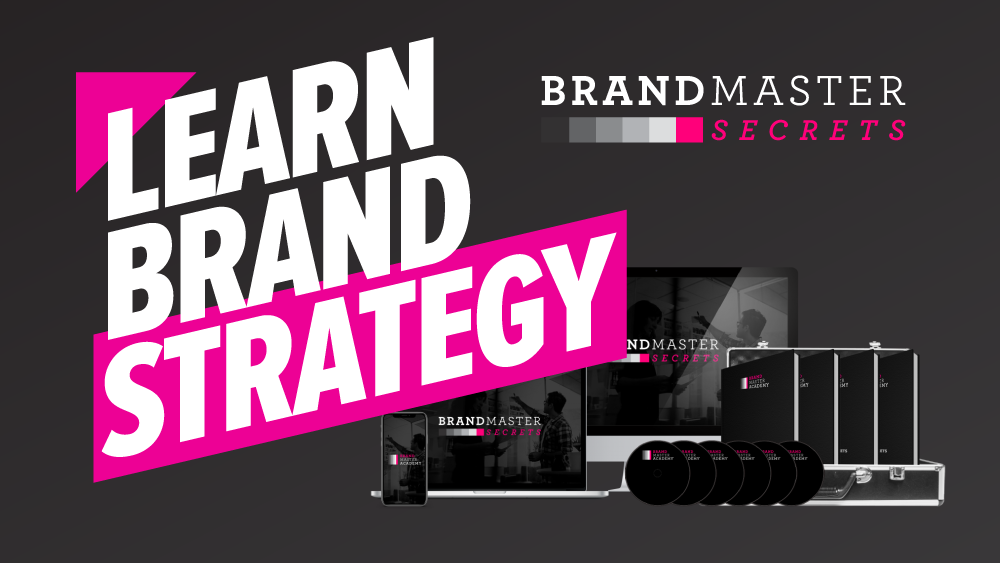
Brand Master Secrets helps you become a brand strategist and earn specialist fees. And in my opinion, this is the most comprehensive brand strategy course on the market.
The course gave me all the techniques and processes and more importantly… all the systems and tools I needed to build brand strategies for my clients.
This is the consolidated “fast-track” version to becoming a brand strategist.
I wholeheartedly endorse this course for any designer who wants to become a brand strategist and earn specialist fees.
Check out the 15-minute video about the course, which lays out exactly what you get in the Brand Master Secrets.
Transcript
Hello and welcome to JUST Branding, the only podcast dedicated to helping designers and entrepreneurs grow brands. Here are your hosts, Jacob Cass and Matt Davies.
Hello, everybody, and welcome to this episode of JUST Branding. We are really excited to have Martin Zarian with us. Hello, Martin. How are you today?
Hello, Martin.
Good.
Hello, Jacob. Lovely being here. Thanks for having me.
Great. Well, who is Martin? I hear our listeners say, if you don’t know, where have you been? Martin is the founder of Factory39, a full-stack agency working with international clients from their base in Cyprus, which I’ve had the absolute honor of visiting and seeing your team. And we did some partnership work on and off over the years, Martin. So thank you for carving out some time for tearing you away from the sunshine in Cyprus to speak with us today. Just for folks out there, Martin, I hope this is right. You are Italian, is that correct?
Oh, that is a complicated question. So my passport is Italian, but as you can tell and potentially assume from my surname, my surname is Armenian. So I was born in Armenia. My mom is Estonian. I grew up in Italy. I’ve made most of my career in London. And then for the last eight, nine years, I live in Cyprus. And if that was not enough, my grandmother was German, my grandfather was Siberian. So I’m truly a bastard mixed-race with everything inside me. It’s a very hard question to answer.
Mr. International. Yeah, well, I was going to say that I’ve known your accent as being very Italian. So if people were listening and thinking, hang on, that doesn’t sound Cypriot or Greek, then that might be why. But I met you in London, didn’t I? So truly international as a kind of a round robin. And that’s great because we have people from all over the world listening. And I think branding nowadays is an international game. You do need to think, we’re not just selling just to our local community, unless we’ve got a very small local brand. Most brands online, you’re pretty much probably selling or have the opportunity to sell globally. So it’s great anyway to get that perspective and get you on the show, Martin. Today, we are talking about rebranding complex B2B brands. So for all you folks out there building brands in the business to business space, this is going to be the episode for you. So let’s kick things off at the beginning, Martin. I’m going to throw a question at you, which we haven’t prepped you for, which is basically we like to start with definitions here within JUST Branding because it’s quite helpful to get that down. So how do you define brand as an idea? What is a brand?
Yeah, it’s a great question. I think I change my definition throughout the years quite often, and I like to kind of morph and remix and copy and steal the definition of much smarter people than me out there. And I change the definition based on the person that I’m speaking to, right? Because brand is one of those toxic words, especially in the B2B, there is a lot of negativity attached to it, and most of the CEOs and some of the CMOs also don’t understand it. So it really depends. If I’m speaking generally, I like to say there is the sum of the experiences and the emotions and the memories that someone has in connection to a business. And if I’m speaking more specifically to a boardroom or to a sui suite, I’m literally telling it’s the only thing left in your toolkit to make differentiation really possible, right? Because differentiation nowadays is way, way less about products and specs and about features, because let’s be honest, let’s start by saying that most of the B2B brands and maybe most of the B2C brands as well, they’re selling exactly the same stuff. So it’s no more about the USP, it’s about the relative differentiation. And brand is how you will generate that long-term relative differentiation and you will be chosen among a pool of competitors that do exactly the same stuff, right? It’s that decision maker and that’s how I like to position it inside the boardroom. Do you want to sell? Do you want to be positioned beyond just product and features that are very hard to implement, protect and innovate? Yes, then you have to invest into your brand.
Fantastic. You mentioned they’re product led B2B brands.
Yeah.
Give us a bit of a sense of how you see that world. Typically, what do you see happening in the B2B space in relation to the way people go to market?
Yeah. What I usually see in the B2B space, and we usually work with growing brands, so brands that did really well for the last 20, 70, some of our clients even 110 years, and they hit the growth plateau. These are the traditional B2B brands that are doing really well product wise, they’re doing really well sales wise as well, but they’re over reliant on short term metrics. They have a sugar rush. They understand short term brand building and marketing. They understand that if you spend $1 today, then you can get $1.5 tomorrow. And that works, and that’s absolutely perfect, but that is the tiniest portion of creating a successful brand. These B2B brands usually are focused on creating that lead generation and then short term availability, but they never fully invested in the long term positioning. And that means that their marketing and their branding effort are really expensive because as soon as you stop putting the dollar into the market to generate attention and get leads, then it goes to zero immediately. It goes flat. So a lot of the work that we do is trying to understand what is their hidden superpower and trying to create a positioning that will create mental availability for the long term. And that is still a very untapped market and a very untapped gap into the B2B, mostly because there is a lack of understanding internally on the fundamentals of brand and the fundamentals of marketing. And as I was telling you before, I’m more and more less keen to talk about brand in those scenarios because as soon as I talk about brand, I get branded as fluffy. That is the problem.
This is the real difficulty, but there’s been a lot of studies, haven’t there, coming out recently, particularly from the Ehrenberg-Bass Institute in Australia, where you are Jacob and the work of Byron Sharp, who we’ve actually had on the show last season. So if anyone’s interested in that, definitely check out those episodes. But the idea being that the brands that invest in that longer term positioning, like you’re talking about, Martin, where perhaps the audience isn’t in the category to buy at that moment, they are then top of mind when the audience is ready to buy. And so that then becomes a really interesting play because, as you say, the marketing then is less expensive when they enter the category to buy because they’ve already got you in their consideration set. If not, and if you’ve done your job really well, you’re number one already in their mind, and it’s a no-brainer that they want to work with you. Now they’ve got the problem or the challenge or the need for your services. That’s the dream. But we don’t, as you say, there’s so many marketers that don’t do that. Businesses are set up for short-term, lead generation. I love that idea of sugar rush, right? Like, yeah, we’re all on that sugar rush. But where’s the long-term thinking? That’s what I’m hearing from you there. Big challenge for everybody out there. So let’s talk about why do product-led B2B brands go down that road? Do you think it’s a risky road for them to be on that short-term sugar rush and why?
Yeah, I think traditionally B2B brands are… They have a very safe approach to market, right? And there is a very toxic quote that I keep hearing into the B2B brands, but this is like everyone else does it. Yeah, but thank you very much. If this is how everyone else does it, then it means that it’s done already. And that means that in an increasingly distracted human race where mental availability is very hard and attention is very hard, going out there with a proposition that has already been done, that has already been tested into that market category, it’s basically business suicide. Because in that case, you’re no more branding, you’re hiding, right? You’re hiding among other competitors that not only offer the same product, but they also brand, they go to market, they position themselves, they talk, they act, they behave, and they are all visually identical. There is a very lovely exercise that it’s the most revealing exercise that we do during our marketing and brand building journey with our clients, which is the reverse assumption. We map the whole category of competitors, we remove the logos, but we show to the managers in this organization, the website, the messaging, the colors, the photography, the tone of voice, and we put the client we’re also working on currently into that mix, and we tell them, go and find yourself. They are not able to find their marketing and their brand activation among the competitors, meaning that everything that they’ve done so far, it’s wasted, right? Even themselves, they are not able to do that. And I can guarantee you, this happens every single time. And I think that, going back to your question, why is this happening? I think there is a fundamental lack of understanding from the business perspective, what does creativity, what does positioning, what does brand and marketing do to the bottom line? You know, you mentioned that study from the Ergenbach Institute, the 95% split, right? We are so obsessed into creating lead generation, but we fail to understand that 95% of our consumers today, they are not in the market to buy that product. They might be tomorrow, or they might be the day after tomorrow, or they might be in the next 10 years. So meaning that if we invest the majority of our budget for the short amount of people, that today have a demand for our supply, we’re wasting the majority of our budget. So in a way, it’s an interesting combination of a lack of understanding, and also what you said very well, an overreliance on safety, but we know that safety doesn’t really work. You have to risk it a bit. All the big brands out there that made it B2B or B2C wise, they did something risky. They went two, three steps ahead, or in a different direction, because we are distracted as humans. Comic movies are not funny anymore. Horror movies are not horror anymore. We’ve seen it all. We are bombarded constantly. So we have to try super, super, super, super, super hard to get at attention.
Yeah, I love that. I always like to… People are like, oh, it feels safe to do what everyone else in the category is doing. I’d say that’s the most unsafe place to be, right? If you look exactly the same as everyone in the category, if your messaging is the same, your look and feel, if you’ve got pictures of men in gray suits, shaking hands like everybody else in your category, that literally is the most unsafe place you can be right now, right?
Yeah.
But what it is is that, yeah, you’re right, there’s this lack of appreciation for that Martin, I think, generally. So I guess that’s what part of this podcast and the work that you do, Martin. I know you do some really great water cooler events on LinkedIn, don’t you, with some of your partners out there, and which, actually, I think, Jacob, you’ve been on it, haven’t you? And I have as well.
We’re trying to get Jacob.
Yeah. The timeshakes issue has been hard, yes.
Well, I’ve made the effort to get on there to help, but, you know, just put it out there. But the point is, is there’s a few of us, aren’t there, out there, trying to help businesses in this way. And I know, Martin, your work very much in and around that is of high value. So I want to kind of ask you about, what do you think the long-term cost of being indistinguishable is? Like, how do you see it? Let’s imagine a brand doesn’t invest, doesn’t think, just sits in. What happened to that brand long-term? What is the danger that they can’t see coming?
Yeah, it’s a very loaded question. I want to answer it with two different ways. I think the first way is that I stumbled on a very interesting research, which is called The Drivers of Profitability in 2023. And I think Andrew Tindall from System One also was talking about it, and Mark Ritson also was talking about it. They kind of analyzed brands from 2003 to 2023, so 20 or 15 years. And they found out, they wanted to ask, what are the growth drivers of a brand long-term, right? So this is a 10, 15, 20-year-old study. I don’t remember, I’m very bad with numbers, but it’s a long-term study. So obviously, at the first step of the growth drivers for a brand was the brand size, right? When we’re talking about brand size, basically, it’s the golden rule that says that brands grow mostly on one way, by managing to expand their customer pool. An example, Porsche grew exponentially in the last couple of years because they started doing SUVs. So all of a sudden, middle-class out of Brits, or UK, or everywhere, they’re buying Porsches because they can put their kids inside and they can go to Aldi and do the shopping. Before, you couldn’t do that with your 911. The Cayenne was built to make the Porsche brand grow by the rule of that brands grow by expanding their customer pool, offering more feel connected to the brand size. There is a risk in there that I want to talk about. I don’t know if many of you know, but Colgate, or Colgate, or whatever you want to call it, the toothpaste brand, a couple of years ago, wanted to launch frozen lasagna product. Because, I don’t know, because honestly, I don’t know, because I don’t know what the hell they smoked and what type of illegal substances were going around in the boardroom, but that’s what they did. Can you imagine how that brand expansion went? Very badly, obviously, right? So you can tap into that 20X revenue growth by expanding your customer pool and expanding your products, but it has to be obviously correlated to your brand and positioning. But guys, the shocking fact of number two in terms of growth enablers and growth multipliers for brands is creative quality. Creative quality, meaning that the ability to be creative with a high level of quality gives revenue results of 12X, which is shocking. So that’s what I mean, that there is a lack of understanding in the boardroom of what actually creativity and the soft, fluffy, coloring things that the boardroom thinks that the brand and marketing is doing can actually do. So there is a need for us, you know, us in the show, our listeners, marketeers, brands, strategy people, to, I think, talk less about brand, what really brand is and more about what brand does. Do we want to call it XYZ? Do we want to call it marketing? Do we want to call it whatever? Call it whatever. But like, it’s really a matter of us, that’s why I’m telling you my definition change, because it’s really a matter of us understanding who we’re talking to and reframing the conversation in a language they will expect. Imagine if I go to a CEO and a CFO and I tell them, the brand is the emotions that people attach to you, and it will help you grow your business. And he’s like, I mean, we already have emotions that people attach to us, like how will emotion grow? But if I tell him that creative quality attached to emotional execution drives 12x revenue increase throughout your 5, 10, 15 years, he will say, oh, that is interesting. Tell me more about it. How does it work? And the other aspect of this is the fact that we also, especially in B2B, we tend to confuse distinctiveness with differentiation, right? So how are you distinctive in a category, right? So how do you want to be immediately perceived? And how can you activate it in a unique, different way? And I give you an example, for example, that everyone knows. If I say, ta-da-ta-ta-ta, what comes after?
Marcus, I love it.
Exactly, right? So that jingle is immediately distinctive because you immediately connected back to a specific brand. Is it the best piece of sonic branding in the world? Arguably, no. You know, I mean, if I had to judge it, it’s fairly basic. But because it’s distinctive, they managed to run it for a really long time over the past 20, 25 years. Everyone knows what comes to that. And then the differentiation comes into play that you have a very clear connection with the brand that says I’m loving it. And it connects back to the stories that you have with that brand. For example, I don’t particularly consume McDonald. I consume McDonald only one occasion when I had seven pints in London and my kind of food control bar goes at the bottom. And I don’t know, after six, seven pints, I kind of feel like I want McDonald. But for someone else, that might be other life situation. And as soon as you have that jingle, it’s a shortcut to that life situation which gives an emotional connection to the brand and you kind of want it. And for the longest time, we believe that this is B2C stuff. It’s not. We are talking to the same person. There is a huge pool of young generation people that grew up with tablets, that grew up with digital experiences, that grew up with modern customer experiences, that now are becoming decision maker in the B2B. They expect to have those experiences also in there. So the gap for the B2B is huge and is there for taking.
If you’re serious about mastering branding and building a thriving creative business, the Brand Builders Alliance is for you. Inside, you’ll get live master classes, mentorship from our eight resident coaches, a stacked resource vault and a global network of brand builders who actually get it. If you’re done winging it alone and are ready to scale with structure, support and serious momentum, head over to joinbba.com and get on the wait list. That’s joinbba.com.
So let’s imagine, Martin, you’ve got in front of a boardroom, because I think this is a lot of branders have this challenge that you’ve been talking about, which is like, how do you talk a language which helps people understand the benefit of these ideas? Let’s imagine you’re in front of a board and they’re skeptical. Maybe they’re an engineering brand, maybe a tech startup or something. What’s your go-to play? You’ve mentioned a couple of things that you say, but talk us through. And imagine sat there, there’s a CFO and their arms are folded and they’re looking really mean and you’re stood in front of them. What’s the things that you like to make sure you highlight? So you mentioned revenue increase and over long term, but is there anything else that you usually share to try and help grease the wheels, as we would say?
Yeah, I think we as branders and marketeers, right? Everyone trying to work into the realm of creativity, branding and marketing, their number one skill is empathy, right? We are empaths. We exist because we are creating solutions that will benefit a wide range of the population. Now, if we take that concept and we put it into the boardroom, I think the first question that we need to ask, who am I talking to? Is it a CEO? Is it a CFO? Is it a CEO? Or is it a CMO? I think the CMO are the easiest to talk to, right? Because they understand the power of brand. They have been trained for that, right? There is a friction there between brand and marketing. And I mean, we can do a lot of talking around that, but I think it’s a bit of a waste of our time. So if I’m talking to a CFO and a CTO and a CEO, I need to really understand what is their mandate in the organization, right? What is their agenda? What they need to achieve? And how can brand help them do that? From the operational perspective, what brand can help is internally, without being directly connected to percentages, is aligning everyone into one direction. Every organization in the world, whether it’s a five people bootstrap startup, or if it’s a 5,000 Fortune 500 public listed, they have this problem. They are all on the same boat, but some of the departments are rowing left. Some of the departments are rowing right. The CEO wants to row forward. The HR manager wants to row backwards. And they’re all moving at a different time, different speed. That is what brand fixes. That is why it’s important to have a strategy, and a positioning, and having a vision, because everyone in the organization knows where we do. And all of us can imagine what is the benefit of all of us going into one direction versus 15 directions. But then, if we’re talking about budgets, and we’re talking about numbers, it’s really about managing short-term spending and long-term spending, and trying to help them visualize where they could be if they manage better that short-term budget and long-term budget. Because once the long-term budget is applied effectively through emotional storytelling, creativity, positioning activation, having a strong strategic foundation, brand becomes a flywheel. By becoming a flywheel, that means that you start attracting the right people, attracting the right customer, you become top of mind when the demand arises, and means that all the rest of the budget goes down. Sales become easier, marketing becomes easier, performance marketing becomes easier, advertisement becomes easier. So it really depends on understanding who I’m talking to, trying to research on them, trying to go into that conversation with some data. And if it’s a CEO and a CTO and a CFO, I don’t even mention brand. As soon as you mention that, they have such a strong negative opinion about the word brand that you lost them. Those first 10, five minutes of the conversation, those are the most important one. If you get them there in their language, then they will listen to you and then you can inject brand later on. I think that is the mistake that creatives do. They go inside or the branders do, they go inside with their craft, they go inside with their belief, which is a correct one but is not a correct one in the eyes of the person you’re talking to. That belief needs to be translated slowly, slowly, slowly, slowly. You cannot go inside with a brand conversation. You need a better brand. They will not listen to that.
So, Martin, I have a question. Before you get in the room, you mentioned research, but obviously you’ve got in the room somehow and there’s been a conversation beforehand. So, you say you don’t mention brand, but you’ve got there being a strategist or whatever your title is. What conversations are you having and how did you get in that room to begin with?
Yeah, I love that question. Personal branding. Everything positive that happened in my life, whether relationship or business, I swear to God, I can track it back to my personal brand. I tracked the other day, I made a bit of math. I have about almost 700,000 of revenue that I bring in that I can directly connect back to my personal brand. I am in a situation now that after seven years of being very strategic about my personal brand building, I have people that tell me, Martin, I wrote this RFP based on your content. I wrote this proposal based on what you said on LinkedIn. I have a few posts saved on LinkedIn that helped me to write this RFP so I can send it to you. It became terrifically much simpler for me to have the correct conversation because I started attracting the right people based on my personal brand. I cannot stress this enough. Do you want to get in better rooms? You have to build your personal brand to attract the right people. Matt, you know very well. Jacob, you know very well. You guys are also killing it. I struggled for a long time. Now, I am almost… I’m not really having irrelevant conversations. I don’t get asked to do logo. I don’t get asked to do strategy. I get asked to do the things that I want to solve because I’ve been putting those things out for the last seven, eight years.
What would you say to people, Martin, because I get asked this sometimes by people I coach and stuff who are… I don’t know, they just feel like it’s… They don’t want to go out and they don’t want to share stuff. They’re worried about what people will think of them on LinkedIn, so they’re nervous about it. You got any sort of tips for those people that have heard that and say, yeah, in theory, I understand I’ve got to position myself, but hey, it’s just not me. It feels a bit boastful or whatever. What do you say to those sort of people?
You guys are killing it. I love these questions. I’m having the time of my life. I get asked that all the time, right? I get asked, Martin, I don’t have time. Martin, I don’t want to be an influencer. I don’t want to be writing. Yalla, yalla, yalla. The reality, guys, is that it’s a bit like the Matrix situation. You have the blue pill and red pill. You want a brand by chance or do you want a brand by choice? Guys, all of us, even my mom and my grandmother, is a personal brand, right? The way that they communicate, they talk, they behave, even in their close circle, that person for me is XYZ because I’ve seen that person, I’ve interacted with that person. The number one problem about personal branding is that it is connected to botox and fake boobs and influencers and all that crap that we see on Instagram, right? We see these influencers that we know that they build a persona for a specific things and they’re not relatable, right? They’re very unachievable and they’re doing that type of influencing that is not really connected to business. But personal brand, going back to your question, is personal, so it’s you. It is a natural, god-given, unique selling proposition. And then it’s about branding that. So a lot of people confuse personal branding with influencing. It’s not really about that. And going back to your question, why will someone build their personal brand? Well, number one, you are a brand already. Do you want to do it by choice or by chance, as we just said? And number two, is your career level, your personal level, your relationship level, your networking level, whether you are a CEO that wants to get into the next Fortune 500 company, whether you are a middle level manager that wants to be promoted, or whether you are a solo entrepreneur that needs to find the right clients. We need to build an image. We need to build a positioning in order to be able to attract the right opportunity and the right people. How valuable is that? And the point number three is that your personal brand will only die the day that you are six feet underground. So it’s a story that keeps evolving and keeps growing. Where does your company want to be in 20 years as your vision? Where do you want to be in 20 years as your personal brand vision? And how can you build an authentic personal brand that will help you get in there? I cannot stress this enough. Everything that happened positively in my life the last seven years is because I started to build my brand.
Yeah, that’s really interesting that you should say like that. What I find as well, so people say like, do you win business off of some of the work that you do on LinkedIn? And the answer is yes. But that isn’t actually where I see the real value of, from my platform, it’s mainly on LinkedIn, similar to yours, Martin. That’s not the real value. There’s a thing that I think that you need to aim towards called trust, right? I need to trust that Martin is the guy for me, right? In an AI driven world where anyone can put anything out there, you can write anything on your website, how do I trust that Martin is the person, right? And there’s some things that cannot be manufactured digitally. And one of those things is consistently showing up, right? Like, there’s Martin with a post again, there he is again. Over years, like you said, you’ve been investing, I think it’s similar to me, like seven, eight years in the space, there is, people know that you’re not faking, right? That you are real, like you are doing this work, this is really you, you know? And that is currency, which you will have against, say, somebody who has just started up and just trying to massage a few AI videos about brand. Do you know what I mean? It’s like, who do you want? Do you want the fake one who’s just popped up in my feed today, or do I want Martin, who I’ve been with for eight years, who I’ve seen his posts, commented, discussed things with him over time, nice guy, he can solve my problem. And that’s what people don’t see. Like you are investing in personal brand in your future. And yeah, you don’t know. It’s like what we were saying at the start, right? From a business B2B perspective, you don’t know the exact tiny ROI, but you know principally that longer term is going to pay off like you were saying. So I think that’s something that everybody really needs to know.
100%. In my case, it’s much easier to track because Factory39 does no advertisement. We do zero regeneration. We do not have sales. Our social media post, probably the last one, was probably three years ago. Our website was not updated in the last six years. So we are the classic example of the cobbler shoes are always broken. We are that cobbler.
Something else worth mentioning here is that by constantly posting and having your website and being seen and constantly visible, this also serves AI and LLMs and search to actually bubble you up higher in results. So I’m getting found through ChatGBT and CoPilot these days because of the history and the consistency of posting. You mentioned personal brand. I literally had a client this week dig up a proposal from 2014 and found me in the archives to give me a call. It landed a deal. So that’s like 12 years ago.
That’s mad.
Because you, during those 12 years, managed to be consistent and be on top of mind. I have a really good client of mine that I worked a couple of years ago. And then at some point he wanted to update their branding. They need to be, they were in a need, sorry, to reposition outside of Cyprus into the UK market. And they were talking with their board and the investor circle. And I said, you know, we really need to do this strategy, we need to do this positioning, but I need to find someone that can really help me. For some reason, my content was not getting directed to him anymore. And he was already a client of mine. So he forgot about me. Someone else in the room said, but why don’t you ask Martin? And he said, oh yeah, how did I forget about Martin? And this goes back to the very first points that we were saying about managing short term and long term, right? Unfortunately, we see 10,000 brands every day. We make 7,000 decision every day. You know, should I brush my teeth at nine? Should I brush my teeth at nine or three? Should I take the dog out? These shoes, those shoes, like, our lives are increasingly complicated. And also we are increasingly bombarded by brand and stimuli. We are over-destructed, over-stimulated, which means that we have to try even harder to just give these people a memory shortcut to get into their memory availability by being continuously out there and reminding them about us. Because this person might be needing a project today, but most of the chances, they might need it in seven years. So from now to the seven years, we have to be in their lives somehow.
100% agree with everything you guys have said there. I think you’ve got it, you’ve got it. But what I wanted to do is shift gear back into the B2B space.
Yes.
Because you just talked there about a client that you heard of that was branching out globally. And I think that’s really important. Like we started this podcast by referencing your global heritage there, Martin. We are in this global world, so I wanted to sort of touch on that because a lot of B2B brands can see opportunities globally. So how should they approach brand strategy in new markets, you know, regionally, across regions, across different parts of the world? What are your thoughts there, Martin?
What they need to be focusing on is managing their original strategy. Right. Every organization in the world has an original strategy, which is usually connected to the founder’s story. Right. So the founder had an idea, he created a business out of it, he became successful. So that is the origin strategy. Now, what will it be based on that, the strategy to expand out of the markets? Right. So how can we translate that into specific markets? And I think translating is really the key word here. We know that we have a core, we know that we have our position and we know that we have our strategy and our vision. We know that works in, let’s say, Cyprus. We need to go into Greece, we need to go into Abu Dhabi, we need to go into UK. How can we solve the problem of being consistent to our strategy by translating it in a way that is activated into that specific location? Because as soon as you go out of your comfort zone, you start tapping into other cultural connotation, you start tapping into other competitors, you start tapping into other language shortcuts. So it’s really important that you are able to maintain your core, but then also be honest with yourself. If you do not know anything about going into the Abu Dhabi from a brand perspective, from an operational perspective, you would have to figure it out and find someone that live and breathe into that location to help you translate the brand to those scenarios. Like we did some work in the past where we were helping one of our organization going from the UK to Japan. And can you imagine, like Japan is one of the furthest away type of culture and business and just modus operandi to the UK. They are two completely different words. So what is still true to our brand and what will not be true because XYZ into the Japanese culture, let’s say. So it’s really important that you find really good partners that understand the local market and are able to translate those things. Because there are things that you don’t want to compromise in your brand, but there are things that they need to be different and activated differently wherever you go in the organization. And you can understand that if you don’t have a strategy internally that is ubiquitously understood by everyone in your organization, there is such a big problem that will become a catastrophic problem expanding it from there. Like I would never add an extra throw to my family house if my foundations are shaky, right? And it’s the same concept for that. If you don’t have that strategy, if you don’t have that positioning, if you don’t have the short and the long term in the market you currently are, you cannot expand because as soon as you’re going to expand, then the problems will become absolutely gigantic. Because the real power of a brand is enabling everyone in your organization to act independently, but always on brand.
Yeah, 100%. I’ve seen so many businesses who splinter, right? And what happens is, is that people, the people have this kind of, internally have this, you could call it ego, but they have like a, it’s kind of like, this is, well, I want to do this, this is right for my market, right? And I don’t care what everybody else says. And that is very short term, it’s very sort of small mindedness. And I find like constantly, I’m wheeled into organizations that are global, where there’s multiple different international teams, they’re all fighting against each other. And it’s like, no, no, no, we should be together, right? We’re fighting the enemy, we’re fighting the strategic enemy out there, we are wanting to create customers. Why do we have to fight each other? And by diluting the brand, we’re actually cannibalizing ourselves, right? And I see this in multiple things, from strategic point right down to execution, where you’ve got teams in Africa who are creating content that is so different to the team in Europe. And you’re like, guys, like, why would you do that? Like, what’s the thinking? And as time goes on, it drifts further and further and further apart until someone like me has to be wheeled in to try and pick up the pieces. You’re absolutely right. So when you’re starting off, get that foundation right. And how would that look, Martin, like, from your perspective? Like, what would you suggest to a board, a CEO, to have in place before then they go to different regions?
They need to have the brand strategy on a page. I think we need to move away from 65 PowerPoint pages full of images, bullet points and paragraphs and manifesto and story and concept and purpose and positioning and mission and visual, USP, customer journey. None of that will help you. None of that will help you. Like, there is not one single C-suite in the world that will read carefully a 65-pages document. That is not what they do. You need to have it in one page. You need to have it into one page, right? So what is your positioning? Where are you playing? You know, how can you win mental availability versus the competitors? And what is the emotional hook that you will deliver? What are your distinctive assets? And how are you going to bring that to life? So those elements, you know, they need to be in one single page. So everyone understands it. Once we have that, then we can ask the question, okay, how does that translate into an effective emotional consistent activation in Japan? How does that translate into Canada? How does that translate into Cyprus? All of those different activation, they have the same emotional hook to the same positioning. So you see how much easier it is now to go and brief a creative agency in Japan, because this is our positioning, this is our emotional hook, this is the mental availability that we can win against our competitor. Now go activate it, but on this. And that is super powerful, because not every company in the world can be the Amazon, it can be Coca-Cola, and own every single entry point in our category. We have to be really, really, really strategic. And again, that is a guiding tool internally, but also you take this single beautiful page of strategy, you gave it to a Japanese creative agency, and they know what they need to be done based on their skills. That is non-negotiable.
100%. I love that. Sometimes I like to boil it down to the big idea, which sums up everything that you’ve just said, the positioning, the value to the customer, where we’re focused, where we’re going to put our resource. If you can get it down to one page, you’ve done well. What I think is funny, if you said to a CEO, I’m going to hire you, Martin, I want you to do six months’ worth of work, and you go to them, and I say, what am I going to get at the back end of it? And you’re like, well, you’re going to get one slide. And they’re like, what the heck? But like that, what you just described, and for folks out there that think, oh, that sounds like dead easy, like that is hard. What Martin has said there, dissolving it down into one slide, that is the work of a strategist. That is where the graft comes in, the stakeholder engagement, the thinking, the research against competitors, the customer research. All of that work is so much effort. And I’ve been on projects that are like 12 months, right, for really complex projects, and you’re sifting through shared loads of stuff. But your job as a brand strategist is to bring that down, make it easy, make it so that everybody can understand and communicate it. And that big word that you just said there, Martin, a line around it, I absolutely…
And Matt, I want to build on that a bit even further, so to give a practical example to the audience as well. Let’s talk about KitKat, right? So it’s a positioning and activation strategy that is being powerfully consistent for the last probably 30, 36 years. How does that one-pager look? Their one-pagered look says, the insight is, breaks are good for you. Okay. Their positioning is, have a break, have a KitKat. That’s it. That’s it. They don’t have anything else. Now, is it unique? It’s not. Is it different? Arguable, because every chocolate brand in the world has something similar. We have sneakers that is similar, we have Mars, I think, that was saying that you’re not you when you’re hungry, right? So have a Mars. So there are many other brands, they tap into that space. But this is where relative differentiation comes into place. Relative differentiation is not about owning something 100% unique. It’s about implementing it in a different way, in a more emotional way, for the longest period of time, in a more consistent time. There are numbers of studies that say how brands are starting to be less and less consistent into their activation, probably because of sugar rush, probably because of a new CMO comes into your organization and wants to change things, probably because a new CEO comes in your organization and the daughter likes pink, so we have to paint everything into pink. I don’t know. Shiny object syndrome, I don’t know. There might be many, many different scenarios, but it’s proven that simple, consistent emotional activation throughout the year generates results, generates mental availability, so that’s why it’s really important that we get that down into one page. We have it signed off. And that’s it, guys. This is us for the next 36 years. Let’s go out there and activate it exactly as KitKat did it.
Yeah, so good. And to the point about the global reality of these things, like what does a break look like in Japan, right? What does a break look like in Europe? What does a break look like in the US? It’s a human, it’s a cultural phenomena that they’ve dominated and owned for many years. And you can see Mars, as you say, trying to break into that, like this idea of being hangry and hungry and trying to look at it in a different angle. But nonetheless, KitKat is a phenomenal example, I think, of a brand that’s culturally relevant and owning it. And yeah, so in terms of operationally, let’s just kind of shift gears a little bit into operations. Let’s say we’ve got our brand on a page, right? We’ve decided what we stand for, our positioning, we’ve done all the research, we’re confident, everybody’s aligned, and we’re going to go for it. Like, how do brands bring that alive? You mentioned activation. Like, what are your kind of sort of advice to anybody in that stage of the process? What would your advice be?
There is a beautiful quote from a person, again, I don’t remember, I’m very bad with this, like names and numbers, they just don’t stick in my brain. But it said, maybe it’s Dixon Buxy, it says that how well a brand is understood externally depends from how well it’s understood internally. So, do you want to build a successful brand externally? Well, it starts internally, right? Even if we have a one-pager, we need to start the external brand campaign by the internal brand campaign. Every single person in the organization, no matter of their position into the organizational hierarchy, needs to understand where we’re going and what we’re doing and how we’re going to be doing it. And the other beautiful quote that I always use, which was supposedly attributed to Kennedy, that he went to visit the NASA Space Center back in the 60s. He saw the caretaker of the building mopping the floor. And Kennedy being Kennedy, supposedly went to this person and said, Hello, I’m Kennedy, the president. And who are you? What do you do at NASA? And this person stops mopping the floor, looks Kennedy in the eyes and says, Well, Mr. President, I’m here to put a man on the moon. Right? So even the apparently lowest piece of the organizational structure knows what the vision organization is. And that’s very important. Once we have that, then we have five people or 5,000 people acting independently, but always moving on brand. So that is the first thing to solve. And we’re talking about months of work, guys, here. We’re talking about years of change management, right? We’re talking about telling Sophie from HR that she’s been doing the same thing in the same way from 15 years, that now we’re starting to do things slightly differently. So how do we translate that into the context of HR? Then we need to go to the CTO building the technology. How do we translate that brand into the language of a CTO? So it’s an incredible, hard, but extremely powerful change management and brand onboarding that needs to be happening internally first. If you don’t have that internally, I can guarantee you there is no external campaign that will fix that. Because if the operations are not able to support the promise that we’re delivering to our customer, we don’t have a business, right? And this might mean taking some hard decision, firing people, hiring people, killing products, killing brands. You know, we do not talk about enough about that strategy is about saying no. It’s about taking hard decisions for the greater good. There is a story that I heard from Mark Ritson. He was talking about how there is a very specific type of bush rats, which they kill their babies or family members in their nest in order to protect the strongest one into their litter. And that similarly goes to brands as well, right? And we’re going to go into brand architecture and portfolio management. So I don’t want to go there because that is a huge topic. A whole other topic is a whole other podcast and probably 15 different books. But it goes back to the ability to align everyone in the organization into the same direction, but being able to also take hard decisions that are based on brand. Now, let’s say that we fix that internal alignment, then it’s all about creativity and emotionality. The rules did not change. It’s scientifically proven that humans respond with production of endorphin, production of dopamine, production of a series of neurological chemical component when they are interacting with an emotion. And if brands are able to create that emotional connection with a consumer, they’re able to buy into mental availability, which ultimately means their opening wallet. So how might do we activate this brand with a series of activation, with a series of campaign that will generate that right emotional connection with our users? And how do we translate that across touch points? Website, applications, how we pick up the phone, how we write our messaging, how we do our campaign, the TV ads, social media, you know, whether internally is aligning all people, externally is aligning all the different touch points. And that is another fundamental mistake that people do, right? They consider some of the touch point insignificance. But I’m gonna tell you a story. Couple of years ago, I wanted to go to a fish taverna, to a fish restaurant here in Cyprus, to take my family to have a Sunday treat, to spend some time with the people that I love the most. And because in Cyprus, some of the businesses, they’re not really good in updating their working hours on Google, I Googled the place and I said, you know, it’s Sunday, maybe they’re closed. Let me give them a call just to be sure. I called the restauranteur, the host picks up the phone and I said, hey, it’s a party of six, we would like to come for lunch. I’m just calling to see if you guys are open. And the gentleman on the other line said, I pick up the phone, what do you think? And I was like, wow, like this person really, really doesn’t want my money and really, really did not understand that even how you pick up the phone is a touch point to activate your brand and to create that positive customer experience and a positive emotion. Needless to say, I didn’t go to the restaurant. I actually was empowered to speak about this negative experience with all the people that I knew. And here we go, broken brand.
Yeah, 100%.
Yeah, can I just pick up on one quick point? Because I just think it’s so important, this idea of aligning everybody and how that looks. Because I recently had a client, well, I’m working with a client, big client in the construction industry in the UK. They’re massive, right? Hundreds, I would say, of employees, okay? You imagine, like, they’re building sites, builders, surveyors, all that good stuff. Anyway, I’m working with their senior exec team. We come up with a strategy. And I was like, we were starting to talk about this phase of activation, okay? Now, usually that’s a really big uphill struggle, but this company, I was so amazed because they have invested for years in internal communications and culture to the point where there is a cadence in the company for this kind of thing, for change management to happen swiftly. So regularly, they invest in all of their people getting in a room, like a big theater, and they’re in the north of the UK, they’re in Manchester. Now, I was actually quite amazed by this, right? So because it was dead easy, so right, we’re going to communicate the strategy to the team, right? What are you doing like next month? We need you in Manchester, you’re going to help us communicate it. This is a normal thing for us, it’s not an unusual thing. All the people come, they go, we got a three, four hundred stadium theater in Manchester. They’re all going to come, we’re going to only have a skeleton staff on the sites, and then we’re going to actually film it, and we’re going to actually live stream it across all the projects that we’ve got on around the UK, and the CEO is on board, it’s dead easy. His briefing is already scheduled here, here, and here. Here’s the comms team, Matt, we need you to speak here. We need you to help. Bam. Now, I was just like, whoa, I’m not used to such, I guess, investment in internal communications. And when I asked the CEO about it, he said, yeah, like that is how we’ve become so successful just generally. And they’re working with, no disrespect to builders, but people that basically are bricklayers, and people that don’t care about corporate strategy, they just want to build great. Yeah, and there’s no disrespect to them whatsoever. But the challenge businesses have is to connect what goes on in the boardroom to everyone. And this company had nailed it, and it was a regular cadence in the year, regularly getting together, regularly discussing it. Everybody understood it, so much so that the CEO told me a story of they had some market research done, and somebody had gone to one of their sites and asked one of the people putting up the boardings outside, about the company values and what the strategy of the company was, and that person putting up boarding was able to tell them, and they were absolutely shocked. So the point I’m trying to make here is that you are right, Martin. That is absolutely correct inside out, and particularly, my advice would be to company owners to put cadence in so that no doubt things are going to have to change over the course of those five, ten year plus in terms of the nuts and bolts. But have a mechanism by which you can communicate, you can connect, and you can engage with your people.
It’s super important. You know how I like to explain to my team, it’s like having a party balloon, but it has normal air inside, not helium. So you hit the balloon, it will go up a bit, and then eventually it will start to going down. So our job internally, as brand change management, is to keep hitting the balloon at regular cadence, so it stays up in the air. And that’s really the game, because people want to go back to status quo. People absolutely despise and hate change. So if we have to make a change internally, it’s what you said, Matt, which is beautiful. It’s about building regular rituals, regular cadence, to keep that belief alive, to keep the people excited and keep going. Otherwise, it’s back to business, it’s Monday to Friday, 9 to 5, people don’t care, and it’s going to be really, really hard to have that brand alive internally.
Right. Well, look, we’re running fast out of time. I’m just wondering, Jacob, is there anything you wanted to pick up with Martin to start closing us out?
It was like a master class of Ritzen, actually. I was picking up on so many things from his courses, and I was like, yeah, and even the KitKat and everything, you’ve so eloquently repeated it all back. So it’s great to hear that, and you’re actually acting on it as well, which is awesome. But yeah, I’ve thoroughly enjoyed this. So Martin, where can people connect with you online?
Yeah, I’m on LinkedIn every day, maybe even too much of too much time. But you can find me there. Yeah, just find me on Martin Zarian in LinkedIn. Send me a message and happy to chat with everyone. And if you guys want to check my work and the things that we do, although the website, it needs a big uplift and new case studies. We have about six, seven case studies that we didn’t manage to put inside there. It’s factory39.io. But yeah, LinkedIn is the best place to reach out to me.
Amazing.
Great.
Well, thanks so much for coming on. Appreciate you sharing your wisdom and your energy. And all the best of luck. And thank you. I know that will be in touch again in the future. So thanks very much, Martin.
Thank you, boys.
Just Branding.